Supreme Court to Address Digital Privacy in Geofencing Case
News

Supreme Court to Address Digital Privacy in Geofencing Case

authorBy Carl Bernstein
DateApr 26, 2026
Read Time2 min

The U.S. Supreme Court is poised to tackle a landmark case that could significantly redefine the boundaries of digital privacy in the United States. At the heart of this legal challenge is a technology known as geofencing, a method law enforcement agencies are increasingly employing to gather intelligence.

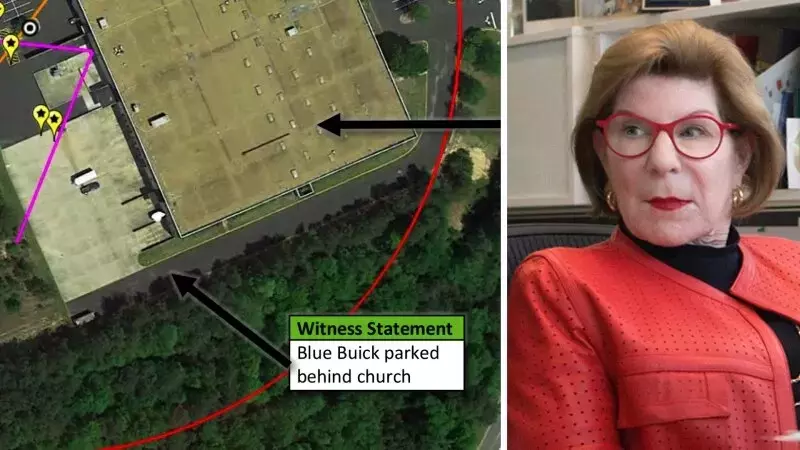
Geofencing involves establishing a virtual perimeter around a specific geographical area. Following a crime, authorities can petition a court for a warrant, not to search physical premises, but to compel technology firms to sift through their vast databases. This allows them to identify users who were present within the designated geofenced zone at the time of an incident. This controversial technique gained prominence after a bank robbery in Midlothian, Virginia, where police utilized geofencing to pinpoint individuals near the crime scene. The fundamental question before the nation's highest court revolves around whether this investigative tool aligns with constitutional protections against unreasonable searches.

The core legal challenge lies in the Fourth Amendment, which safeguards individuals from unwarranted intrusion into their personal lives and property without probable cause and a specific warrant. The application of geofencing presents a novel interpretation of these protections in the digital realm. The Supreme Court's deliberations will determine if this technology is a legitimate and innovative law enforcement tool, an overreaching invasion of privacy with Orwellian implications, or perhaps a complex blend of both. Ultimately, the court's decision will establish crucial precedents for how digital location data can be accessed and utilized by the government, shaping the future of digital rights for millions of Americans.

This pivotal case offers an opportunity to thoughtfully consider the balance between public safety and individual liberties in an era of rapid technological advancement. The court's ruling will undoubtedly influence how technology companies handle user data and how law enforcement conducts investigations, fostering a more transparent and just framework for digital interactions.

More Articles
News
The Isolating Impact of "Emotionally Disturbed" Labels in Education
This article explores the experiences of students labeled with emotional or behavioral disorders (EBD), highlighting how their separation into specialized classrooms can lead to isolation and hinder their academic and social development. It delves into the subjective nature of the EBD label, its disproportionate application to students of color and those from low-income families, and the long-term consequences, including increased incarceration rates and reduced self-sufficiency. The piece also examines the challenges faced by educators and the ongoing debate surrounding the effectiveness and equity of current special education practices.
By Mona ChalabiApr 26, 2026
News
New Leadership to Revitalize NASCAR with Focus on Unity and Excitement
Steve O'Donnell has been appointed as the new CEO of NASCAR, marking a significant shift as he is the first non-France family member to hold the position. He aims to reinvigorate the sport, emphasizing unity among stakeholders and a return to its core exciting identity. His tenure follows a period of internal challenges, including a recent antitrust lawsuit settled with team owners.
By Michele NorrisApr 26, 2026
News
Rocky Balboa Statue Finds New Home Inside Philadelphia Art Museum
The famous bronze statue of Rocky Balboa, a cinematic boxing legend, is making its debut inside the Philadelphia Museum of Art. This marks a significant shift from its traditional outdoor location, coinciding with the 50th anniversary of the original film. Its inclusion is part of a new exhibition, "Rising Up: Rocky and the Making of Monuments," which re-examines the intersection of art, sports, and cultural identity, sparking conversations about the evolving definition of public art.
By Michele NorrisApr 25, 2026
News
Boston Marathon: A Beacon of Compassion and Selflessness
While elite runners chased victory at the Boston Marathon, the true spirit of humanity shone brightly through a remarkable act of camaraderie. When a college student collapsed near the finish line, two fellow competitors paused their own races, setting aside personal ambitions to offer assistance. Their selfless actions transformed a moment of individual struggle into a powerful display of mutual support, proving that the greatest triumphs extend beyond the finish line.
By Isabel AllendeApr 25, 2026
News
Controversial White House Fountain Renovation Under Trump Administration
During the Trump administration, a no-bid contract worth $17.4 million was awarded to Clark Construction for the renovation of two ornamental fountains in Lafayette Park, near the White House. This contract, significantly higher than the Biden administration's estimated $3.3 million for similar work, raised concerns due to the use of an "urgency" exception that bypasses typical open-bidding procedures. The funds for this project were drawn from government coffers, unlike other privately financed Trump projects.
By Ann CurryApr 25, 2026