SpaceX's Ascent and Key Developments in Mobility and AI
Charting New Courses: Innovation and Investment in Modern Transport
SpaceX's Remarkable Market Performance and Potential Future Collaborations
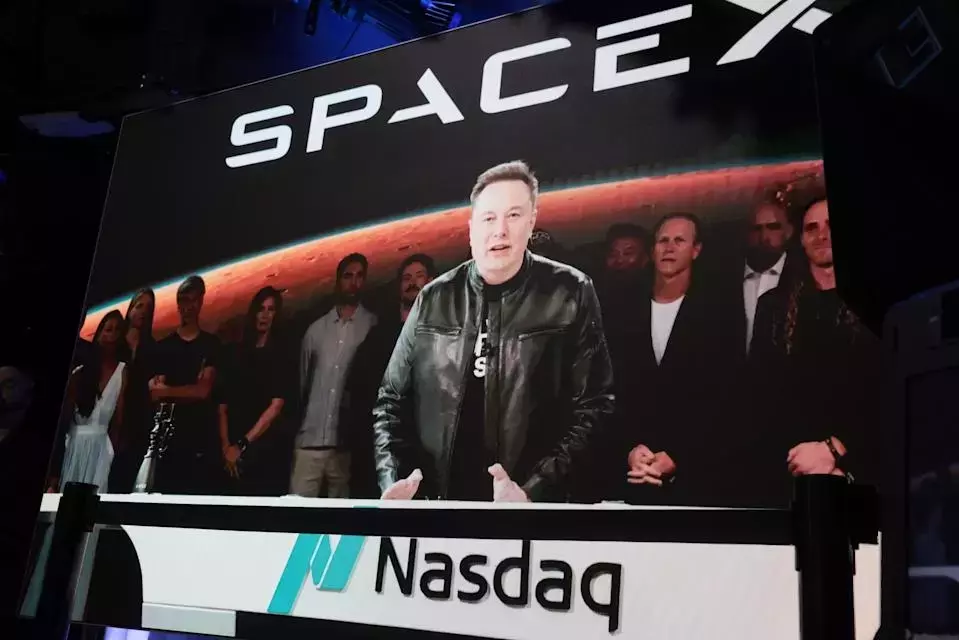
SpaceX has achieved a significant milestone, with its market capitalization exceeding that of Tesla, its sibling company under Elon Musk's leadership. Following its recent public offering, SpaceX now stands as a prominent entity among leading U.S.-listed corporations. This impressive financial standing is further amplified by ongoing discussions and subtle hints regarding a potential merger with Tesla, a move that could streamline operations and consolidate Musk's ventures. Gwynne Shotwell, SpaceX's President and COO, has openly acknowledged the possibility, suggesting such a consolidation could simplify leadership and strategic alignment.
General Motors' Evolving Battery Strategy and Market Insights
General Motors is navigating a complex path with its battery supply chain for electric vehicles. Reports indicate that the 2027 Chevrolet Bolt will utilize lithium-iron-phosphate (LFP) cells from a foreign supplier, specifically identified as China's CATL. Despite this, GM currently has no firm plans to manufacture LFP cells for its own EVs, although it is set to commence LFP production at an Ultium plant for energy-storage systems in partnership with LG Energy Solution. This strategy highlights GM's cautious approach to integrating LFP technology beyond immediate needs, as it also expands into commercial energy storage solutions for data centers and the grid, signaling a broader engagement in the battery market beyond just electric vehicles.
Leadership Transitions and Strategic Acquisitions in the EV Sector
Lucid Motors is experiencing significant executive shifts, with Emad Dlala's departure marking a notable change following Silvio Napoli's appointment as CEO. This signals a potential restructuring within the luxury EV manufacturer. In another key development, Waymo, a leader in autonomous driving technology, has acquired a vast proving ground in Arizona from an Apple-associated shell company for $220 million. This acquisition underscores Waymo's commitment to scaling its operations and further distancing Apple from its previously rumored autonomous car project, which was reportedly discontinued in 2024.
Key Investment Rounds Fueling Innovation in Transportation Technologies
Several companies across the mobility spectrum have successfully secured substantial funding. CameraMatics, an Irish firm leveraging AI-powered video telematics for fleet safety, raised €49 million. Clear Robotics, an Indian startup developing autonomous ships, attracted $1.75 million in pre-Series A funding. Evotrex, focusing on hybrid RV travel trailers, closed a Series A round with $30 million. Volteum, a developer of fleet management software for electric and mixed fleets, received €2.5 million. Additionally, Indian quick-commerce delivery startup Zepto announced plans for an IPO potentially valued at $1 billion, and school transportation service provider Zūm is reportedly exploring its own IPO, indicating robust investor confidence in innovative transport and logistics solutions.
Advancements in Autonomous Systems and Future Mobility Solutions
The autonomous driving sector continues to push boundaries. Decart, an AI startup, introduced Oasis 3, an interactive world model capable of generating photorealistic driving environments in real-time, initially targeting autonomous vehicle simulations. Meanwhile, Waymo is enhancing its services with a new loyalty program, Waymo Premier, offering perks for frequent robotaxi users. The company also unveiled a sophisticated computer model designed to more accurately compare its autonomous driving software's performance against human drivers. The competitive landscape for robotaxis is heating up, with Waymo, Uber, and Wayve preparing for a significant presence in London. Furthermore, Wing, Alphabet's drone delivery service, is expanding into seven new U.S. cities through its partnership with Walmart, demonstrating the increasing normalization of drone-based logistics.
Recapping the SpaceX IPO: Expert Perspectives
Following its highly anticipated initial public offering, the SpaceX IPO has generated considerable discussion among industry experts. TechCrunch's senior reporter Sean O’Kane and AI editor Russell Brandom recently shared their initial thoughts and analysis on a special episode of the Equity podcast, offering valuable insights into the market's reception and the implications of SpaceX's public debut. Their commentary provides a deeper understanding of this pivotal moment for the company and the broader space and tech industries.