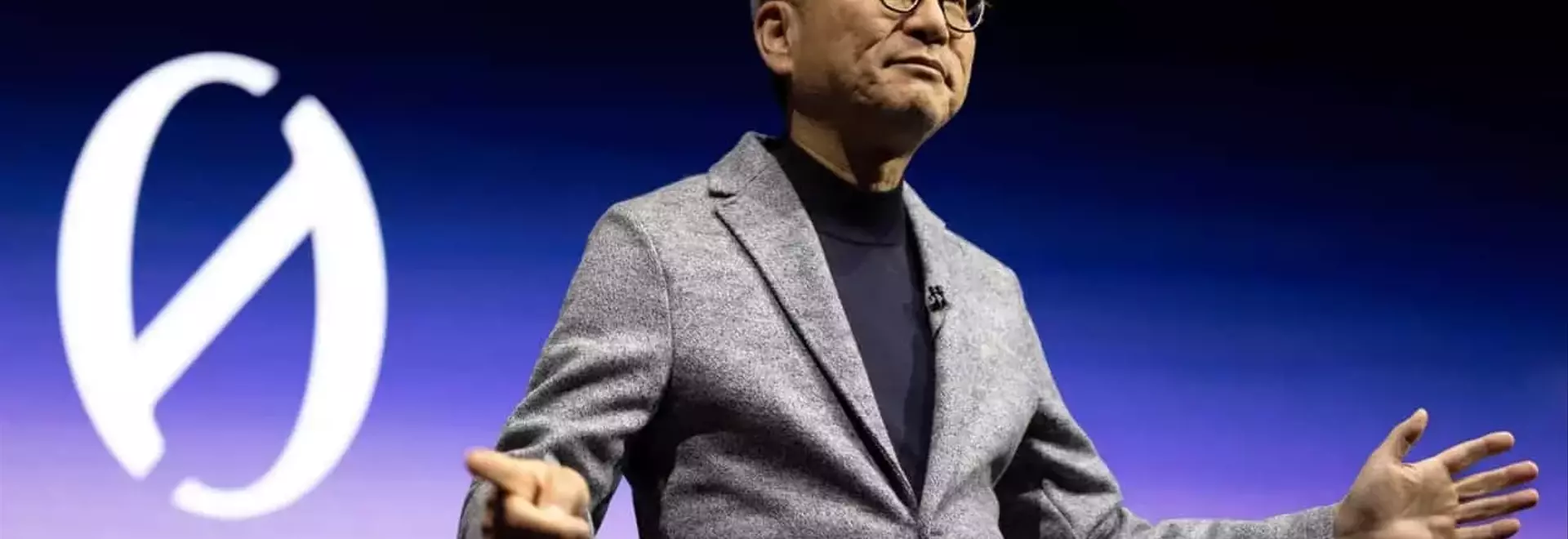
Honda CEO Survives Boardroom Challenge Amidst Financial Struggles
In the wake of Honda's most challenging financial year in decades, CEO Toshihiro Mibe found himself at the center of a corporate storm. A faction of former executives reportedly sought his removal, citing concerns over the company's performance and strategic direction. This internal turmoil unfolded as Honda recorded its first annual financial deficit in close to 70 years, prompting scrutiny of its leadership and future trajectory. Despite the pressure, Mibe has retained his position, though not without consequence, as he accepted a significant pay reduction. This episode highlights the immense pressures facing automotive leaders as the industry navigates a period of profound transformation and economic volatility.
Amidst a backdrop of unprecedented financial losses and an attempted leadership change, Honda is now charting a revised course for its future. The automaker, under Mibe's continued leadership, is reassessing its electric vehicle strategy and adjusting its product timeline. This period of re-evaluation comes as the company grapples with the impact of a challenging global market and evolving consumer demands. The decisions made now will be crucial in determining Honda's ability to regain its financial footing and sustain its competitive edge in the rapidly changing automotive landscape.
Leadership Under Scrutiny: The Executive Challenge
Honda's chief executive, Toshihiro Mibe, recently navigated a significant challenge to his leadership, as a group of former company executives reportedly sought his removal. This attempted ouster was primarily fueled by discontent over the automaker's financial performance, particularly in the crucial Chinese market, and a perceived misallocation of resources towards initiatives like sports sponsorships. The unrest came to a head following Honda's announcement of its first annual loss in nearly seven decades, a stark indicator of the deep-seated issues that prompted the executive dissatisfaction. Critics within the company expressed concerns that Mibe was not sufficiently attuned to customer needs and that his public statements at times negatively impacted employee morale, creating an environment of uncertainty within the corporate ranks. The tensions escalated to the point where a former chief executive, Nobuhiko Kawamoto, directly confronted Mibe, advising him to step down. This intense period of internal struggle underscores the immense pressure on leadership to deliver results, especially during periods of significant financial downturn and strategic shifts.
The internal dissent against CEO Toshihiro Mibe reached a critical point following Honda's first annual loss in nearly 70 years, precipitating an attempt by disgruntled former executives to force his resignation. A key driver of this dissatisfaction was the company's underperformance in the Chinese market, a critical region for global automakers. Additionally, Mibe's perceived prioritization of ventures such as sports sponsorships over core business areas raised concerns among the former leadership. A detailed summary of these internal discussions highlighted accusations that Mibe was disconnected from customer feedback and that his public comments inadvertently damaged employee morale. The pressure culminated in a direct call for his resignation from former chief executive Nobuhiko Kawamoto. Despite these formidable challenges, Mibe successfully weathered the storm, retaining his position but agreeing to a 30 percent reduction in his salary as a concession to the company's financial struggles and a gesture of accountability. This event serves as a vivid illustration of the high stakes involved in corporate leadership, particularly when confronted with significant economic headwinds and internal challenges.
Honda's Strategic Re-evaluation and Future Product Lineup
Following a period of significant corporate introspection and financial setbacks, Honda is actively re-evaluating its strategic roadmap, especially concerning its electric vehicle initiatives and future product development. The company recently announced a significant pivot, abandoning its ambitious goal to transition entirely to electric vehicles by 2040 and simultaneously canceling the development of three forthcoming electric models. This shift reflects a pragmatic adjustment to market realities and a renewed focus on optimizing its existing and hybrid offerings. Looking ahead, Honda plans to extend the production life of popular models such as the Odyssey and HR-V, bridging the gap until next-generation replacements are ready. The Accord, another key model, is slated for a major design overhaul, aiming for a more dynamic aesthetic, with a potential transition to an exclusively hybrid powertrain by 2030, signaling a strong commitment to hybrid technology in the interim. These strategic adjustments underscore Honda's adaptive approach to navigating the complexities of the global automotive market and its commitment to a diversified product portfolio.
In response to its recent financial difficulties and a shifting automotive landscape, Honda is undergoing a comprehensive strategic re-evaluation, particularly in its approach to electric vehicles and its future product pipeline. The automaker has notably reversed its earlier commitment to an all-electric lineup by 2040, opting instead for a more gradual transition and discontinuing three previously announced electric vehicle projects. This strategic recalibration indicates a more cautious and diversified approach to electrification, balancing innovation with market demand and profitability. As part of this revised strategy, Honda intends to prolong the production cycles of its successful Odyssey and HR-V models, with new iterations expected by the end of the decade. Furthermore, the Accord is set to receive a significant design refresh, moving towards a more aggressive and sporty appearance, and there is a strong possibility of it becoming a hybrid-only offering by 2030. Concurrently, Honda is developing a new V6 engine designed for its next-generation hybrid systems, aiming to deliver enhanced driving performance and towing capabilities while targeting a 30 percent improvement in fuel efficiency. These initiatives collectively demonstrate Honda's pragmatic pivot towards a more balanced and adaptable future, emphasizing hybrid technologies and the continuous evolution of its core product offerings.