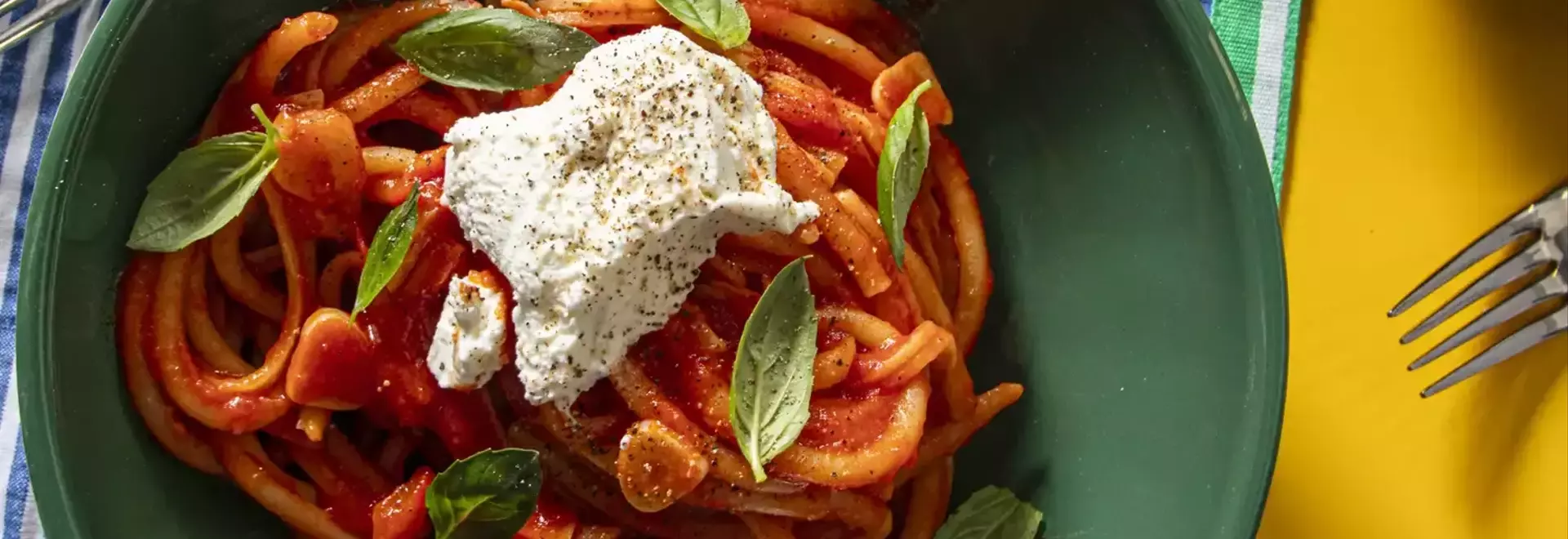
Garlicky Gochujang Tomato Bucatini
Savor the Fusion: Spicy, Sweet, and Savory Pasta Perfection!
The Art of Swift Flavor Development
When time is of the essence, culinary brilliance often lies in smart ingredient choices and efficient techniques. Unlike elaborate, slow-cooked dishes that demand extensive preparation and leave a trail of dirty cookware, this pasta recipe shines in its simplicity and speed. The secret to its profound taste without the long wait lies in the strategic use of high-impact ingredients. Gradually cooking garlic in olive oil coaxes out its sweetness and prevents bitterness. Frying gochujang briefly before adding the tomatoes intensifies its unique spicy-sweet notes. Finally, a short simmer melds these flavors into a harmonious, rich sauce.
The Synergistic Harmony of Passata and Gochujang
Tomato passata, a smooth Italian tomato purée crafted from perfectly ripe, sweet tomatoes, is a cornerstone for creating robust sauces quickly. Its inherent sweetness and balanced acidity provide an excellent foundation without the need for extensive cooking or pureeing whole tomatoes. However, it's the unexpected partnership with gochujang, a Korean fermented chili paste, that elevates this sauce beyond the ordinary. Gochujang's complex spicy, sweet, and umami profile perfectly complements the passata, transforming a classic Italian concept into an adventurous, deeply flavorful fusion. Imagine a pasta arrabbiata, but with an amplified depth of savory goodness.
Crafting a Rich Sauce with Remarkable Efficiency
The challenge with preparing a quick tomato sauce is often avoiding a thin or underdeveloped flavor profile. This recipe cleverly bypasses this issue. It begins by thinly slicing an entire head of garlic, allowing it to cook evenly and gently in olive oil until it reaches a soft, aromatic, and subtly golden state. Next, the gochujang is introduced to the hot oil, where it "blooms," deepening its color and concentrating its spicy-sweet essence. The passata then joins the mix, simmering just long enough to achieve a glossy texture and allow all the flavors to intertwine, delivering a sauce that tastes wonderfully rich and complex in mere minutes.
Preparing the Perfect Pasta Base
Achieving the ideal foundation for your sauce begins with perfectly cooked pasta. Start by bringing a generously sized pot of salted water to a rolling boil. Cook the bucatini according to the package directions until it reaches an al dente texture, meaning it's firm to the bite but not hard. Before draining, make sure to reserve half a cup of the starchy pasta water, as this will be crucial for achieving the perfect sauce consistency later on.
Infusing the Sauce with Aromatic Depth and Spicy Sweetness
While your pasta water heats, turn your attention to the sauce. In a large skillet, combine the olive oil and thinly sliced garlic. Cook this over medium-low heat, stirring occasionally, for about 5 to 7 minutes. This gentle cooking process ensures the garlic softens, releases its fragrant oils, and turns a light golden color without burning, which would impart a bitter taste. Following this, add the gochujang to the skillet. Continue to cook, stirring frequently, for approximately 1 minute, allowing the gochujang to loosen and deepen slightly in color, intensifying its rich flavor.
Harmonizing Flavors Through Gentle Simmering
Once the gochujang has bloomed, stir in the tomato passata and salt. Bring the mixture to a gentle simmer and let it cook over medium-low heat for 8 to 10 minutes. During this time, the flavors will meld beautifully, and the sauce will begin to thicken slightly, developing a glossy, cohesive texture. If the sauce starts to bubble too vigorously, reduce the heat to maintain a gentle simmer. Once the sauce has achieved its desired consistency and flavor, remove it from the heat and set it aside until the bucatini is ready.
Final Assembly and Flavor Adjustments
As the bucatini finishes cooking, return the tomato-gochujang sauce to a gentle simmer over medium-low heat. Add the drained bucatini to the skillet, along with the reserved half-cup of pasta water. Stir continuously for about 1 minute, ensuring the sauce thoroughly coats each strand of pasta and adheres beautifully. Taste the pasta and adjust the seasoning with additional salt if needed to achieve your desired flavor balance.
Elevating the Dining Experience with Finishing Touches
To serve this delightful dish, transfer the pasta into individual serving bowls. Add a generous dollop of creamy ricotta cheese on top; its cool, smooth texture beautifully tempers the sauce's spicy edges. Finish with a sprinkle of freshly ground black pepper and a scattering of torn basil leaves, which add a fresh, aromatic counterpoint to the rich and vibrant flavors of the pasta. Enjoy this comforting and dramatic meal, perfect for any weeknight.