Florida's English-Only Driving Test: A New Hurdle for Spanish Speakers
Florida's recent decision to implement an English-only policy for its driving tests has sparked considerable debate and created significant obstacles for the state's substantial Spanish-speaking population. This new regulation, which took effect in February 2026, eliminates the option for aspiring drivers to take their written and oral exams in Spanish, a long-standing practice. The move has prompted driving schools in predominantly Hispanic areas to innovate their teaching methods, focusing on rote memorization of English driving terminology to help students navigate this linguistic barrier. This policy change reflects broader political discussions on immigration and assimilation within the state, raising questions about accessibility, public safety, and cultural integration.
Florida's New Driving Test Policy: Challenges and Responses
In the vibrant and diverse state of Florida, a significant policy shift has recently taken place, impacting countless Spanish-speaking residents. As of February 2026, the Florida Department of Highway Safety and Motor Vehicles has mandated that all new driver's license exams, both written and oral, must be conducted exclusively in English, without the aid of translators. This development aligns with a broader push for English-only policies, championed by certain political figures who emphasize the importance of linguistic assimilation.
The repercussions of this change are particularly evident in cities with large Hispanic populations, such as Miami and Orlando. Individuals like Alex López, a 41-year-old construction worker from Guatemala, embody the challenges posed by this new rule. Despite his functional English in professional settings, López found himself struggling with the 50-question multiple-choice driver's exam, failing it twice. His experience highlights a critical barrier for many who, while proficient in daily communication, lack the specialized vocabulary required for a formal driving test.
The state's rationale for this policy, according to supporters like Florida House Representative Berny Jacques, centers on enhancing road safety and promoting assimilation. Jacques, who is of Haitian descent, cites a tragic incident involving a commercial truck driver and emphasizes the long-standing official English language status of Florida, established in 1988. He argues that the new rule encourages immigrants to integrate more fully into American society by fostering English proficiency.
However, critics, including Adriana Rivera of the Florida Immigrant Coalition, contend that the policy unfairly targets Hispanic and other minority groups. They point out the lack of data linking English proficiency to driving safety and warn that the new requirements could force many into unlicensed driving, particularly in a state with limited public transportation options. This concern is acutely felt in Miami-Dade County, where Spanish and Haitian Creole are widely spoken, and the policy's full implementation in April has stirred considerable apprehension.
The historical context of language debates in Miami further illuminates the current situation. Previous attempts to restrict multilingual services in the 1980s were eventually overturned, demonstrating a cyclical nature to these discussions. Former Miami Mayor Manny Díaz, who was instrumental in repealing earlier English-only ordinances, expressed disappointment, viewing the current policy as an unnecessary burden driven by political fear-mongering rather than practical necessity. He argues that Miami-Dade's multicultural and multilingual environment has historically been a source of strength and prosperity.
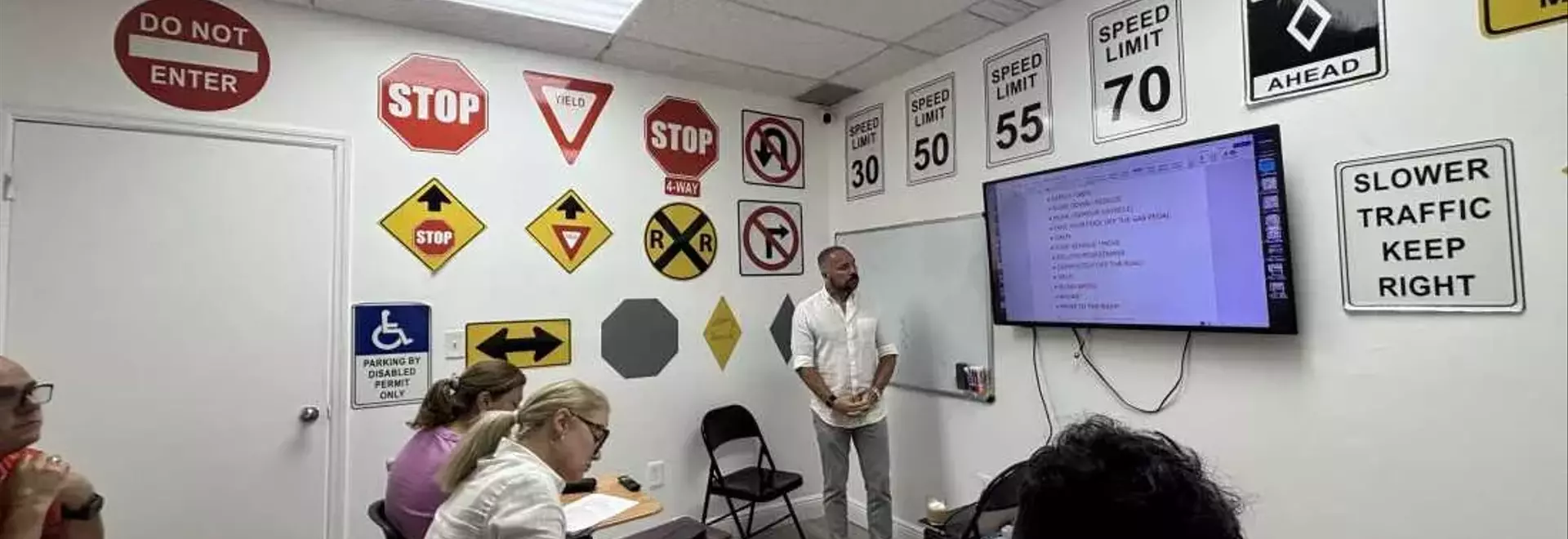
In response to these challenges, driving schools like Speedway Driving School in Hialeah, which primarily serves Latin American immigrants, have adapted their curriculum. Instructor Johannes González now focuses on helping students memorize key English terms and phrases that commonly appear on the test. While instruction is still largely in Spanish, the emphasis is on recognition and recall of English driving vocabulary. However, these changes have led to longer class durations and increased failure rates, especially among older students, causing a decline in enrollment, as noted by school owner Yuri Rodríguez.
The impact of this policy was starkly illustrated by the varied outcomes among students. While Yaima Fuentes Pérez, a 41-year-old Cuban immigrant and former journalist, successfully passed her written test with only one error after weeks of study, Alex López, the construction worker, faced another setback, underscoring the demanding nature of the new English-only requirement.
The implementation of Florida's English-only driving test policy serves as a powerful reminder of the complex interplay between language, immigration, and public policy. While proponents advocate for assimilation and safety, critics highlight the potential for marginalization and practical difficulties for a significant portion of the population. This situation underscores the ongoing debate about how best to balance cultural integration with the practical needs and diverse linguistic backgrounds of a multicultural society. It prompts us to consider the far-reaching consequences of such policies, not only on individuals' daily lives but also on the social fabric of the community as a whole. Ultimately, the quest for a driver's license in Florida has become a symbol of a larger struggle for accessibility and recognition for many Spanish-speaking residents.