US Senators Oppose Major Media Merger Citing Monopoly Concerns
In a significant development, prominent U.S. senators Bernie Sanders and Elizabeth Warren have separately, but convergently, raised serious concerns regarding the proposed consolidation of major media entities. Their objections center on the potential for unchecked corporate power to distort public discourse, influence political narratives, and jeopardize sensitive personal information. This bipartisan opposition underscores a growing unease in Washington over the increasing concentration of ownership within the media landscape and its broader societal implications.
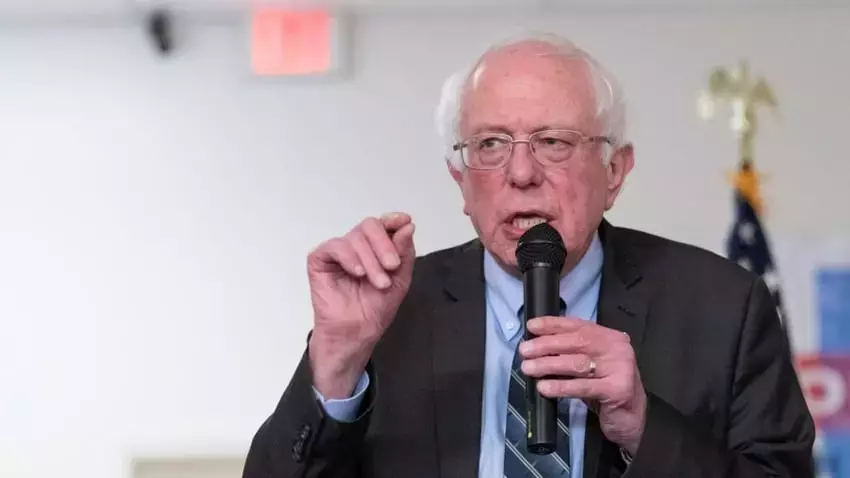
Senator Sanders specifically targeted the impending merger of Paramount Skydance and Warner Bros. Discovery. He highlighted the potential scenario where David Ellison, an ally of former President Donald Trump, could gain control over both CBS and CNN. Sanders articulated his apprehension in a public statement, asserting that powerful financial interests are now extending their dominion beyond economic and political spheres into the critical realm of news dissemination. He unequivocally deemed the prospect of a single individual wielding such extensive influence over these two prominent news organizations as unacceptable, framing the situation as a crucial test for policymakers to resist the burgeoning centralization of power in mass media. “It is not enough for the oligarchs to control our economy and political system; they now seek to consolidate their grip over the media,” he declared.
Adding another layer to this critique, Senator Warren echoed similar sentiments, although her focus extended to the implications of foreign investment in U.S. media companies. She voiced particular alarm about sovereign wealth funds connected to Saudi Arabia, Qatar, and Abu Dhabi potentially acquiring near-controlling stakes in leading American media businesses. Warren argued that such arrangements could not only grant access to vast amounts of personal data but also create vulnerabilities and leverage points over American journalistic institutions. She called upon regulatory bodies to intervene and prevent these mergers, emphasizing the imperative to safeguard both national security and the privacy of American citizens. Her earlier criticism of a separate merger approval by the Trump administration in September 2025 further highlights her consistent stance against media consolidation and its potential for undue influence and even illicit transactions.
Both senators underscore a shared concern regarding the erosion of public trust in news sources, directly linking it to the structure of media ownership. Warren previously cautioned that excessive concentration in Hollywood could lead to a reduction in diverse content, citing examples like the series “Severance” that might be jeopardized if fewer decision-makers are at the helm. This perspective suggests that reduced competition could stifle innovative and potentially "riskier" projects, leading to a more homogenized media landscape. The ongoing discussions about the Paramount Skydance and Warner Bros. Discovery merger continue to draw intense scrutiny, with the Department of Justice’s staff attorneys reportedly evaluating arguments that the transaction would not harm rival studios or creative talent. However, Sanders' and Warren's calls push for a broader consideration, asking if governmental agencies should view media consolidation through a distinct lens, one that prioritizes democratic principles and public interest over purely corporate or economic justifications.
Ultimately, the arguments presented by Senators Sanders and Warren challenge the conventional wisdom surrounding corporate mergers, particularly within the media sector. They compel a re-evaluation of how regulatory bodies assess such deals, urging them to consider the far-reaching consequences for journalistic independence, consumer data privacy, and the integrity of democratic discourse. The outcome of these debates will likely shape the future of media ownership and content creation in the United States, determining whether the public interest will prevail against the forces of corporate centralization.