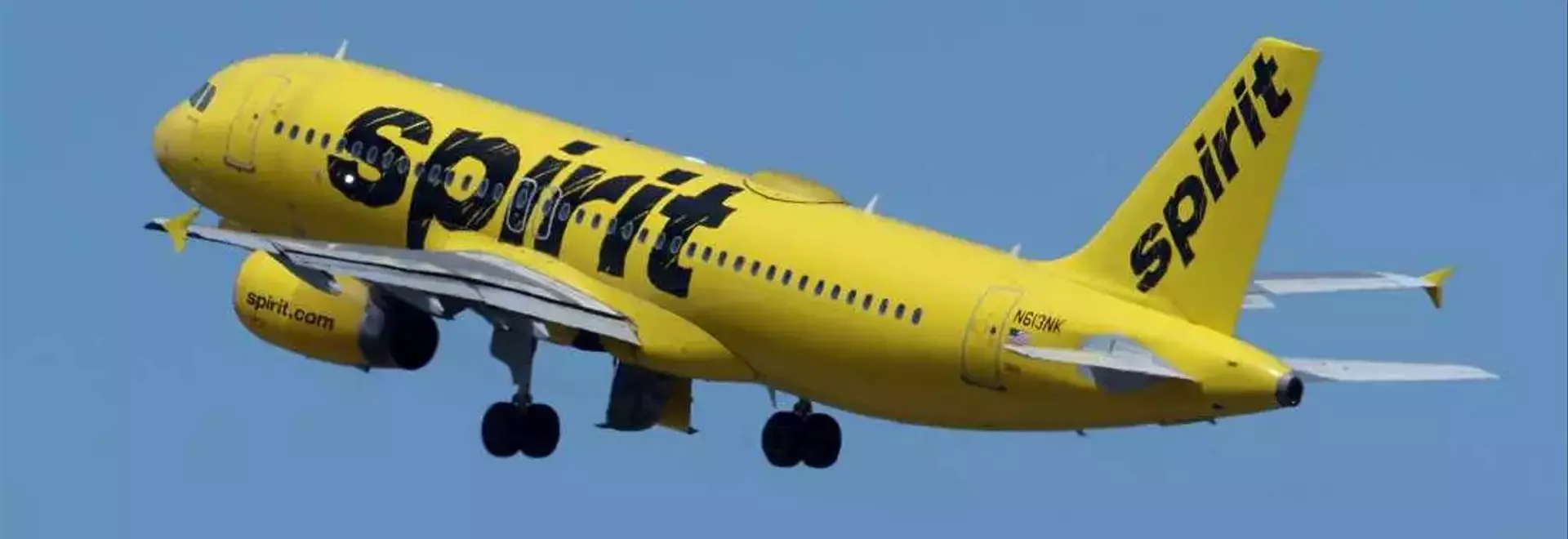
Spirit Airlines' Decline: A Case Study in Airline Industry Evolution
Spirit Airlines, once a trailblazer in the ultra-low-cost airline sector, is now confronting considerable headwinds as larger, traditional airlines have effectively integrated similar cost-cutting measures, while broader economic trends disproportionately affect its core customer base. The company's recent struggles highlight a significant shift in the competitive landscape of the aviation industry, where the initial advantage of stripped-down services and rock-bottom fares has been eroded. This evolution sees legacy carriers not only matching basic economy offerings but also leveraging extensive loyalty programs and vast networks to maintain their market dominance, leaving budget airlines in a precarious position amidst rising operational costs and a tightening consumer purse.
The current predicament of Spirit Airlines can be traced back to a dramatic transformation within the airline industry over the past decade. Previously, budget carriers like Spirit carved out a niche by eliminating non-essential services to offer exceptionally low base fares, attracting a large segment of price-sensitive travelers. This strategy, often dubbed 'unbundling' or 'drip pricing,' allowed them to grow rapidly, even as consumer satisfaction often lagged due to charges for what were once standard amenities. Ben Baldanza, a former CEO of Spirit, famously compared the airline's model to 'Dollar General,' emphasizing its focus on affordability over luxury. However, this success prompted a strategic response from major airlines.
Legacy carriers such as Delta and United, observing the outflow of budget-conscious passengers, began to emulate Spirit's model. They introduced 'basic economy' fares that mirrored the no-frills experience of budget airlines, offering reduced legroom, no complimentary food or beverages, and restrictions on seat selection. This allowed them to compete directly on price in online search results, effectively neutralizing one of budget airlines' primary competitive advantages. Industry analysts, like Henry Harteveldt, note that this aggressive price competition was a direct result of larger airlines needing to retain passengers who were increasingly drawn to cheaper options.
Beyond price matching, the established airlines deployed a powerful counter-strategy: their sophisticated loyalty programs. According to economist Severin Borenstein of UC Berkeley Haas School of Business, these programs, encompassing co-branded credit cards, corporate partnerships, and extensive frequent flyer benefits, became a formidable weapon. They incentivized travelers to remain loyal to major carriers by offering perks like early boarding, preferred seating, free baggage, and access to premium lounges. While budget airlines attempted to launch similar programs, they struggled to replicate the scale and appeal of their larger rivals, whose vast flight networks made earning and redeeming rewards far more practical and valuable for frequent flyers.
Adding to these competitive pressures, budget airlines have been severely impacted by recent economic turbulence. The early 2020s witnessed a surge in fuel prices, exacerbated by global conflicts, alongside a tight labor market that drove up wages, particularly for pilots. These increased operational costs directly challenge the fundamental premise of budget airlines: offering ultra-low fares. As costs rise, so must ticket prices, eroding the core appeal for their target demographic. Furthermore, a broader economic trend shows that while wealthier individuals continue to spend on travel, lower and middle-income consumers, facing high inflation and interest rates, are cutting back on discretionary spending, including air travel. This reduction in demand from their primary customer base has further squeezed budget airlines, mirroring the struggles faced by discount retailers like Dollar General itself.
The confluence of increased competition from legacy airlines, the powerful draw of their loyalty programs, and challenging economic conditions has created a difficult environment for budget carriers. Spirit Airlines' recent bankruptcy filings and the discussion of potential government bailouts or mergers highlight the severity of these challenges. While a merger could offer a lifeline, some argue that industry consolidation may ultimately harm consumers by reducing competition and potentially leading to higher fares. The fate of Spirit and other budget airlines underscores a crucial lesson in dynamic market competition: even innovative business models can be undermined when larger players successfully adapt and leverage their inherent advantages, especially in an unpredictable economic climate.