South Africa Appoints Apartheid-Era Negotiator Roelf Meyer as US Ambassador Amid Strained Relations
News

South Africa Appoints Apartheid-Era Negotiator Roelf Meyer as US Ambassador Amid Strained Relations

authorBy Michele Norris
DateApr 15, 2026
Read Time3 min
South Africa's diplomatic ties with the United States have recently seen significant shifts, marked by the appointment of a veteran negotiator to a crucial ambassadorial role. This move signals a deliberate effort by Pretoria to mend and strengthen its relationship with Washington, which has encountered considerable turbulence in the recent past. The individual chosen for this pivotal position brings a wealth of experience in high-stakes negotiations, cultivated during a transformative period in South African history.

Bridging Divides: A New Era of Diplomacy for South Africa and the US

South Africa's Strategic Diplomatic Move: Appointing a Veteran Negotiator as US Ambassador

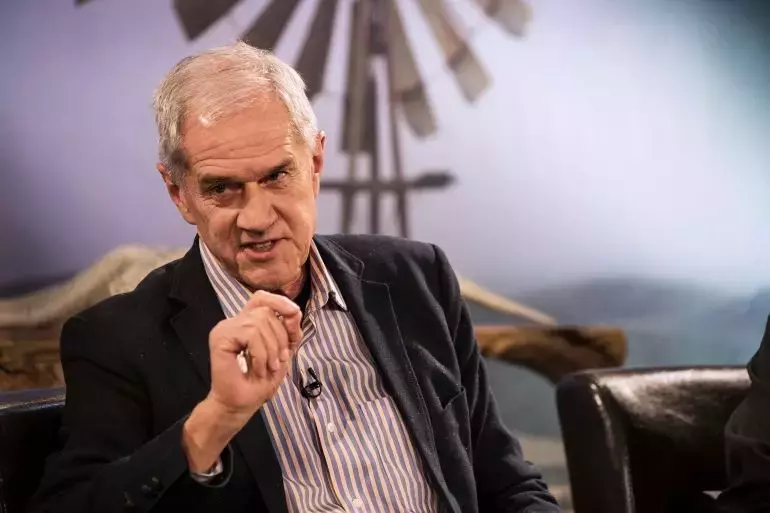
In a significant diplomatic development, South Africa has named Roelf Meyer, a prominent figure known for his instrumental role in negotiating the end of apartheid, as its new ambassador to the United States. This decision, widely reported by local media, is perceived as a clear indication of Pretoria's commitment to revitalizing its often strained relationship with Washington, following a challenging period marked by various political and economic disagreements.

Navigating Tumultuous Waters: The Recent History of US-South Africa Relations

The past year has witnessed considerable strain in diplomatic exchanges between South Africa and the US. The absence of a South African envoy in Washington, D.C. since March 2025, following the expulsion of Ambassador Ebrahim Rasool by then-US President Donald Trump, underscores the depth of this friction. Rasool's critical remarks regarding the 'Make America Great Again' movement led to his controversial removal, with US Secretary of State Marco Rubio publicly accusing him of inciting racial division.

The Genesis of Discord: Expulsion, Aid Freezes, and Refugee Programs

The diplomatic rift deepened with a series of actions by the Trump administration. An executive order halted most foreign aid to South Africa, a decision influenced by South Africa's legal challenge against Israel at the International Court of Justice concerning the situation in Gaza, and its domestic land reform legislation aimed at redressing historical racial inequalities. Further escalating tensions, the US launched a refugee program specifically for white South Africans, based on claims of government-led persecution in their homeland.

The Negotiator's Pedigree: Roelf Meyer's Background and Experience

Roelf Meyer, at 78 years old, is renowned for his extensive experience as a negotiator, particularly under immense pressure. As a member of the white Afrikaans minority, he previously held ministerial positions within the apartheid-era Nationalist Party government. His most notable achievements came in the 1990s, where he played a crucial part in the negotiations between the Nationalist Party and the African National Congress (ANC) that ultimately led to the dismantling of segregation and the establishment of South Africa's first democratic elections in 1994.

A Shared History: Meyer's Connection with President Ramaphosa and His Political Evolution

During the pivotal negotiations to end apartheid, Meyer served as the chief negotiator and established a working relationship with Cyril Ramaphosa, who was then a key negotiator for the ANC and is now South Africa's current president. This shared history provides a unique foundation for their present collaboration. Demonstrating a significant political evolution, Meyer himself joined the ANC in 2006, further cementing his commitment to a unified and democratic South Africa. His appointment as US ambassador is pending the completion of all necessary diplomatic protocols in Washington, D.C.

More Articles
News
Basketball Beyond the Court: Fashion, Legacy, and Financial Debates
This article explores various facets of the basketball world, from the intersection of high fashion with the WNBA Draft to the unique relationship between NBA players and their sneakers. It also delves into Stephen Curry's reflections on his father's jersey retirement, discussions around the current state of basketball, the ineffectiveness of 'tanking' strategies in the NBA, the growing importance of investing in women's basketball, and debates regarding WNBA players' salaries.
By Rageh OmaarApr 14, 2026
News
Direct-to-Consumer Blood Testing: Empowerment or Peril?
The rise of direct-to-consumer blood testing services offers individuals unprecedented access to their health data. However, this trend also presents challenges in interpreting complex medical results without professional guidance, potentially leading to unnecessary anxiety or misinformed health decisions. While these services offer transparency and convenience, experts caution against frequent, undirected testing and emphasize the irreplaceable role of a physician in contextualizing and acting upon blood work results.
By Katty KayApr 14, 2026
News
Humans Mimic AI Chatbots for Fun
A website named 'Your AI Slop Bores Me' has garnered millions of visitors by allowing humans to playfully pretend to be AI chatbots, satirizing the abundance of AI-generated content. This phenomenon highlights a growing trend of people engaging with fake AI to reconnect with human interaction and inject humor into a technologically saturated world. Comedian Ben Palmer also uses a similar approach, creating fake ChatGPT sites that lead to amusing exchanges with unsuspecting users.
By Anderson CooperApr 14, 2026
News
The Brain's Shared Pathways for Seeing and Imagining
New scientific findings indicate that the neural mechanisms the brain employs to perceive objects are the same as those used for visual imagination. Research published in the journal Science highlights that both seen and imagined objects activate the same neurons and utilize an identical neural code. This discovery could revolutionize our understanding of vision, aid in developing prosthetic devices for the visually impaired, and enhance computer models simulating visual processes.
By Christianne AmanpourApr 14, 2026
News
The Ongoing Congressional Debate Over Section 702 of the Foreign Intelligence Surveillance Act
Congress is currently debating the renewal of Section 702 of the Foreign Intelligence Surveillance Act (FISA), a critical surveillance tool used by U.S. intelligence agencies. While proponents argue its necessity for national security, civil liberties advocates raise concerns about potential warrantless surveillance of American citizens. The debate highlights the tension between safeguarding national security and protecting individual privacy rights.
By Lester HoltApr 14, 2026