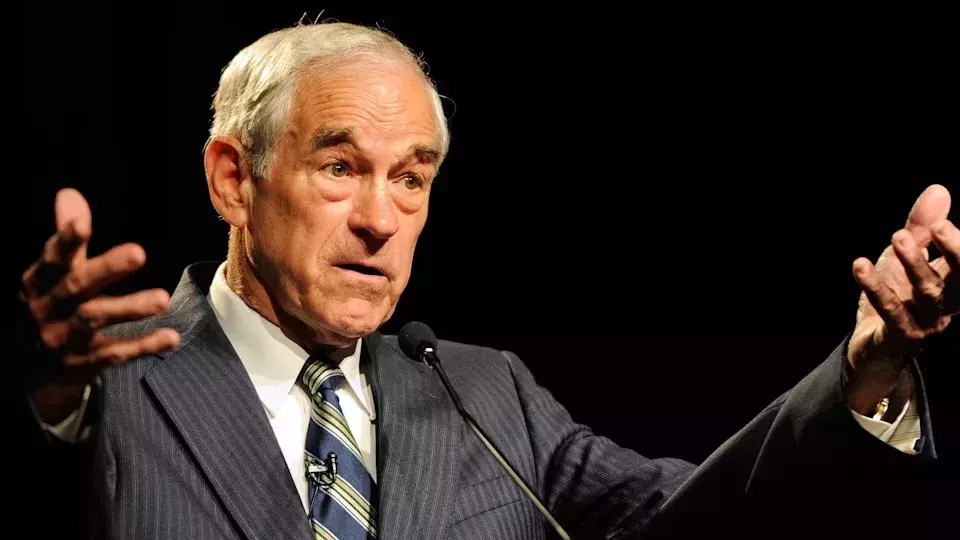
Ron Paul's Dire Warning: Safeguarding Your Wealth in a Fiat Currency World
In the aftermath of former U.S. Congressman Ron Paul's recent alarming pronouncements regarding the fragility of the American financial system, investors are re-evaluating strategies for safeguarding their assets. Paul's critique, delivered during an interview, harks back to a pivotal moment in economic history: the United States' departure from the gold standard in 1971. His core contention is that a system reliant on unbacked currency is inherently deceptive and prone to inflationary pressures, ultimately eroding the wealth of ordinary citizens. This perspective underscores the necessity for individuals to proactively shield their financial future from the potential instability of a fiat monetary regime.
Ron Paul's Economic Warning and Investment Alternatives
On a significant Sunday evening, August 15, 1971, former U.S. Congressman Ron Paul witnessed a momentous announcement from President Richard Nixon that would forever alter the course of global finance. Nixon declared the suspension of the dollar's convertibility into gold, effectively dismantling the Bretton Woods system. Paul, recalling this event during a recent interview with Tucker Carlson, described it as a profound turning point in monetary history. He posits that this decision paved the way for the current fiat currency system, where the Federal Reserve possesses the unchecked ability to create money. This, he argues, is a fundamentally flawed structure built on deception, leading to severe economic consequences such as rampant inflation. Indeed, data from the Federal Reserve Bank of Minneapolis illustrates a dramatic decline in purchasing power since 1971, where $100 today holds the value of just $12.58 from that era. In response to these concerns, Paul advocates for a strategic approach to investment, emphasizing the importance of diversifying assets to counter inflation's erosive effects.
Historically, gold has served as a reliable hedge against inflation, cherished for its inherent scarcity and independence from central bank manipulation. As Paul has famously stated to CNBC, gold's value tends to appreciate over the long term as long as central banks continue to print money. Other prominent figures, such as JPMorgan CEO Jamie Dimon, echo this sentiment, foreseeing a potential surge in gold prices to $10,000 an ounce. Investing in gold, particularly through vehicles like a gold IRA, offers tax advantages while providing a shield against economic turbulence. Beyond precious metals, real estate also stands out as a robust inflation hedge. Property values and rental incomes tend to rise with inflation, offering investors a stable, adjusting revenue stream. Platforms like Arrived, supported by visionaries such as Jeff Bezos, enable individuals to invest in shares of vacation and rental properties, democratizing access to real estate investment with minimal capital and management responsibilities. Similarly, accredited investors can explore private-market real estate opportunities through platforms like Lightstone DIRECT, gaining access to multifamily and industrial assets with investments starting from $100,000. For those seeking even greater diversification, alternative assets like fine art have demonstrated a low correlation with the S&P 500 and a strong appreciation trajectory since 1995. Platforms such as Masterworks have made high-end art investments accessible to a broader audience, allowing investors to purchase shares in blue-chip artworks by celebrated artists like Picasso and Basquiat.
Ron Paul's insightful warnings serve as a potent reminder of the inherent risks within an unfettered fiat monetary system. His arguments compel us to critically examine the foundations of our economic stability and consider proactive measures to protect individual wealth. The emphasis on tangible assets such as gold, real estate, and fine art highlights a growing trend among savvy investors to seek havens beyond traditional financial instruments. This approach is not merely about wealth accumulation but about resilience and foresight in an ever-evolving economic landscape. Ultimately, the discourse around these alternative investments encourages a more thoughtful and diversified strategy for financial well-being, fostering a deeper understanding of how to navigate periods of uncertainty and safeguard one's nest egg against inflationary pressures.