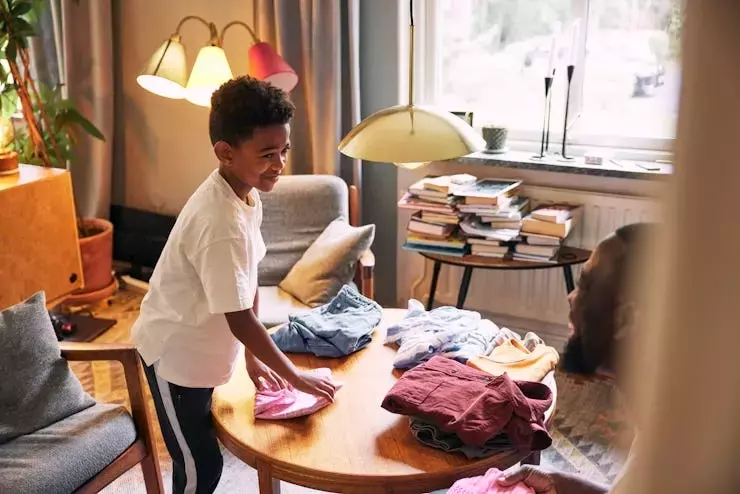
The Ongoing Debate: Do Children Still Contribute to Household Tasks?
Cultivating Responsibility: The Evolving Role of Children in Household Chores
Diverse Approaches to Household Contributions
The method through which children engage in household responsibilities varies significantly across families, and even among siblings within the same household. While some parents rigorously implement chore charts and daily task assignments, others adopt a more relaxed stance, finding themselves periodically re-emphasizing the importance of tasks like emptying the dishwasher or organizing clothes.
The Imperative of Shared Family Duties
Despite differing methodologies, there's a general consensus among many parents regarding the necessity for children to contribute to the household. This perspective emphasizes that every child should understand their role as part of a family unit, where tasks such as tidying up toys or assisting with household appliances are integral to collective effort and mutual support.
A Parent's Dilemma: The Chore Perception Gap
One parent's experience, shared on an online forum, illustrates a common parental conundrum. This parent described their nearly nine-year-old's weekly responsibilities, which included age-appropriate tasks like pet waste cleanup, dish unloading, room tidying, and managing trash bins. However, the child's assertion that she was the only student in her entire school with such duties sparked a broader conversation among parents about the prevalence of chores in modern households.
Reassessing Parental Expectations and Responsibility
The online discussion served as a platform for parents to reflect on their own approaches to teaching responsibility. Many acknowledged that introducing structured chores might be a gradual process, often initiated as children approach pre-teen years when parents recognize a growing need for greater independence and accountability. This transition often involves guiding children through tasks rather than immediately implementing a rigid chore system from an early age.
Beyond the Label: Instilling Helpful Habits
Numerous parents highlighted that while their children perform various tasks, they don't necessarily label them as "chores." Instead, these contributions are integrated into the daily rhythm of family life, framed as acts of helpfulness or shared responsibility. Whether it's feeding a pet or putting away laundry, the emphasis shifts from a transactional understanding of chores to a more holistic view of family members supporting one another.
Fostering Life Skills for Future Independence
Ultimately, the objective behind involving children in household tasks extends beyond mere cleanliness. Parents aim to equip their children with fundamental life skills that will serve them well in adulthood. This includes an understanding of home maintenance, personal care, and maintaining a hygienic environment, ensuring they are well-prepared for independent living.
The Enduring Value of Contribution
Whether through formal chore charts or spontaneous requests for assistance, the consensus among many parents is that encouraging children to contribute to their living space is crucial. This proactive approach helps children develop a sense of responsibility and capability, preparing them for the realities of managing a household and personal well-being, even if they perceive themselves as unique in their household contributions among their peers.