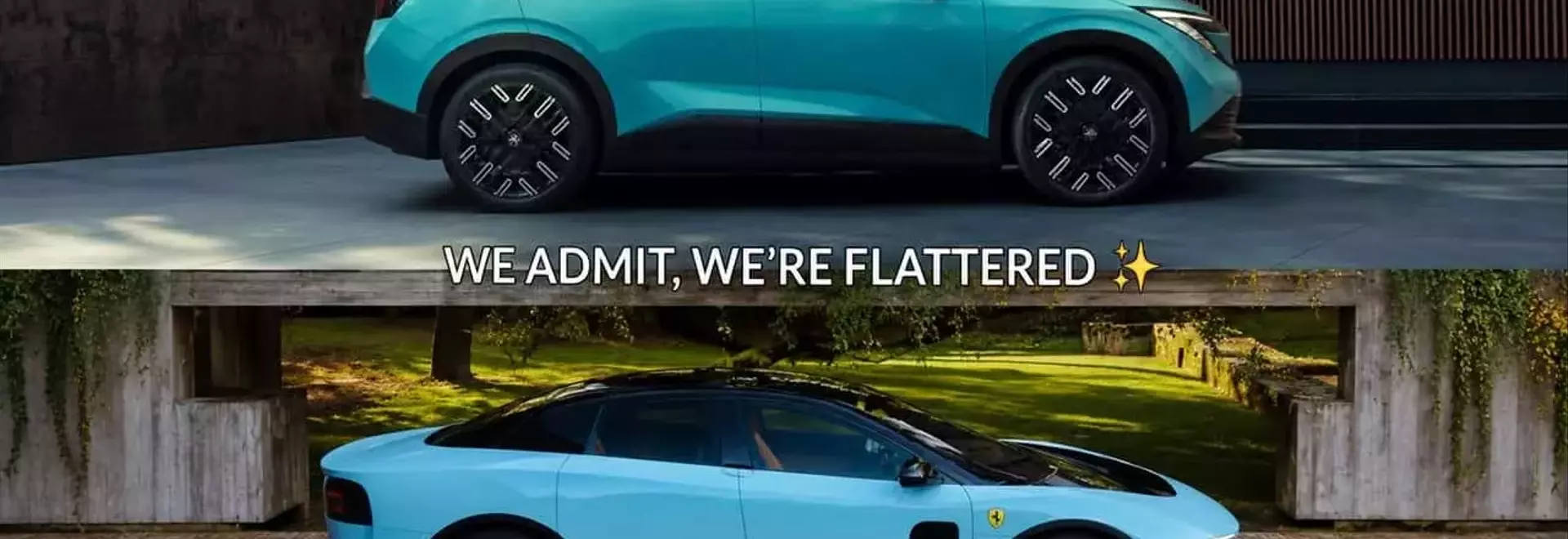
Nissan 'Flattered' by Ferrari Luce Comparisons to Leaf EV
In a surprising turn of events within the automotive industry, Nissan Ireland has publicly acknowledged and playfully embraced the comparisons drawn between Ferrari's newly unveiled electric vehicle, the Luce, and their own third-generation Leaf. This unexpected interaction has ignited considerable discussion across social media platforms, as Nissan's humorous response has both engaged the public and subtly highlighted the vast differences between the two electric cars. The company's lighthearted jab at a luxury powerhouse like Ferrari marks an unusual but effective approach to social media engagement in the competitive EV market.
The automotive landscape recently witnessed an unexpected moment of cross-brand banter when Nissan Ireland chose to respond to widespread public comparisons between Ferrari's newly launched electric model, the Luce, and Nissan's more utilitarian third-generation Leaf. Despite glaring disparities in design philosophy, market positioning, and price point, a casual observation by some netizens regarding a superficial resemblance prompted Nissan to issue a playful statement. The company expressed its “flattery” over the perceived design similarities, effectively turning a simple observation into a viral marketing moment. This unusual exchange has sparked considerable conversation online, demonstrating how brands can leverage humor and public perception to generate buzz.
Nissan's Playful Response to Design Similarities
Nissan Ireland's social media channels became the stage for a witty exchange after the introduction of Ferrari's electric vehicle, the Luce. Observers began pointing out superficial resemblances between the luxury EV and Nissan's more humble Leaf model, particularly noting a similar color palette and general silhouette. Far from ignoring these comparisons, Nissan opted to lean into the jest, releasing a statement that humorously declared they were “flattered” by the perceived imitation. This strategic and good-natured response quickly captured public attention, transforming what could have been an awkward moment into an engaging social media event.
Following the debut of the Ferrari Luce EV, a surprising wave of commentary emerged online, highlighting perceived design parallels with the Nissan Leaf. While any genuine likeness between the two vehicles, beyond perhaps a shared exterior color or broad outline, is minimal upon closer inspection, Nissan Ireland ingeniously capitalised on this chatter. The automaker's decision to issue a tongue-in-cheek remark, suggesting that "imitation is the sincerest form of flattery," and directly addressing Ferrari, was a calculated move to inject humor into the competitive EV narrative. This playful acknowledgment, far from being a concession, served to elevate Nissan's brand visibility and foster community engagement, inviting a surge of comments and discussions across various platforms. The move showcased a savvy understanding of modern digital interaction, proving that even a vast difference in automotive segments can be bridged by a well-placed, lighthearted comment.
The Stark Reality: Price and Market Differences
Beyond the amusing social media banter, a closer look reveals the profound differences between the Ferrari Luce and the Nissan Leaf, particularly in terms of market segment and pricing. The Ferrari Luce commands an exorbitant price tag, starting at approximately €550,000 in Italy, placing it firmly in the ultra-luxury performance vehicle category. In stark contrast, the Nissan Leaf is positioned as an accessible electric car for the masses, with its price beginning at just under €41,000. This massive price disparity, making the Luce roughly 13.5 times more expensive than the Leaf, underscores that these vehicles cater to entirely different consumer bases, rendering any direct comparison of their market rivalry moot.
Despite the humorous public comparison, the financial and market positioning of the Ferrari Luce and the Nissan Leaf couldn't be more divergent. The Luce, Ferrari's foray into the electric hypercar segment, carries a starting price in Italy that is astronomically higher than that of the Nissan Leaf. This enormous cost difference, nearly fourteen times greater, clearly illustrates that these two electric vehicles exist in entirely separate automotive realms, targeting distinct demographics. While the Leaf offers an entry-point into electric mobility for a broad consumer base, the Luce is an exclusive luxury item, designed for a clientele seeking unparalleled performance and prestige. Thus, while Nissan’s jest was effective for social engagement, the notion of these cars being competitors is purely superficial, highlighting instead the vast spectrum of offerings within the evolving electric vehicle market.