MSI Claw 8 EX AI+ Sets a New High Bar for Handheld Gaming PC Pricing
MSI's latest portable gaming device, the Claw 8 EX AI+, has entered the market with a considerable price tag, raising questions about accessibility for the typical gamer. Equipped with Intel's cutting-edge Arc G3 Extreme processor, this new iteration promises enhanced performance. Early impressions from industry experts suggest it could redefine benchmarks for future handheld gaming PCs. However, its premium cost positions it at the higher end of the spectrum, prompting a discussion on the evolving economics of portable gaming hardware.
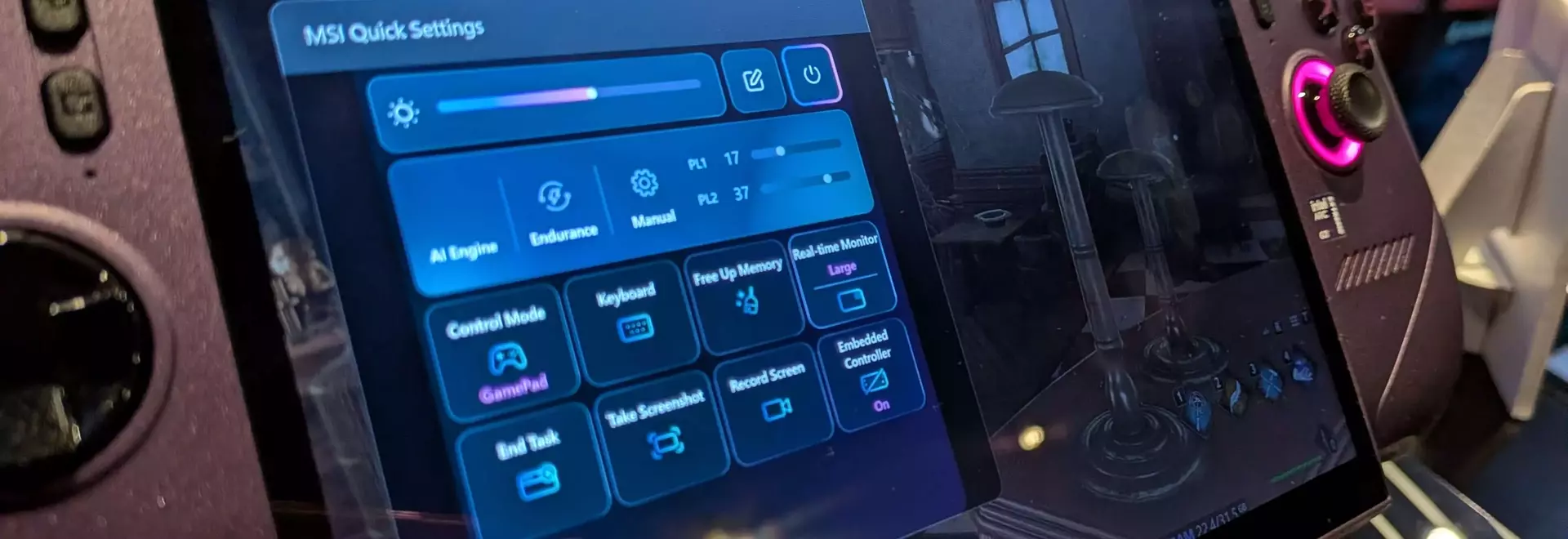
The MSI Claw 8 EX AI+ builds upon its predecessor, the MSI Claw 8 AI+ A2VM, which received positive feedback for its capabilities. The integration of Intel's new Arc G3 Extreme processor is a significant upgrade, expected to deliver robust gaming experiences on the go. An editor who had a hands-on experience with the device at Computex described it as setting a new standard for portable gaming, hinting at its advanced features and superior build quality.
Despite the promising performance, the official pre-order price of $1,799 has been met with a degree of shock. While initial leaks suggested a cost exceeding $1,500, confirming this figure underscores a noticeable shift in the pricing strategy for high-end gaming handhelds. Devices featuring 32GB of RAM and a 1TB SSD, combined with the new Panther Lake-based chip, are inherently expensive to produce, which contributes to their elevated market value.
Interestingly, some retailers might offer slight price variations. Best Buy, for example, has listed the new handheld at $1,700, though its availability is currently pending. This situation suggests that consumers might find opportunities for marginal savings depending on where they choose to purchase the device, assuming prices remain stable upon wider release.
This trend of escalating prices is not unique to MSI. Other popular handheld gaming PCs have also seen their prices climb. The Lenovo Legion Go S SteamOS, once available for $750-$800, is now often found for over $1,500. Even the Asus ROG Xbox Ally X, initially considered expensive at $1,000, now appears to be a more cost-effective option compared to these newer, pricier models. This is particularly true when considering that a Steam Deck OLED 1TB, despite its older APU, is only marginally cheaper.
The increasing cost of handheld gaming PCs, exacerbated by factors such as the rising prices of components like memory, poses a challenge for the average consumer. While these devices offer unparalleled convenience and the flexibility to play PC games anywhere, the significant investment required makes them a luxury rather than an accessible option for many. The market is clearly moving towards high-performance devices, but this comes at the expense of broader affordability, making purchasing decisions increasingly complex for gamers.