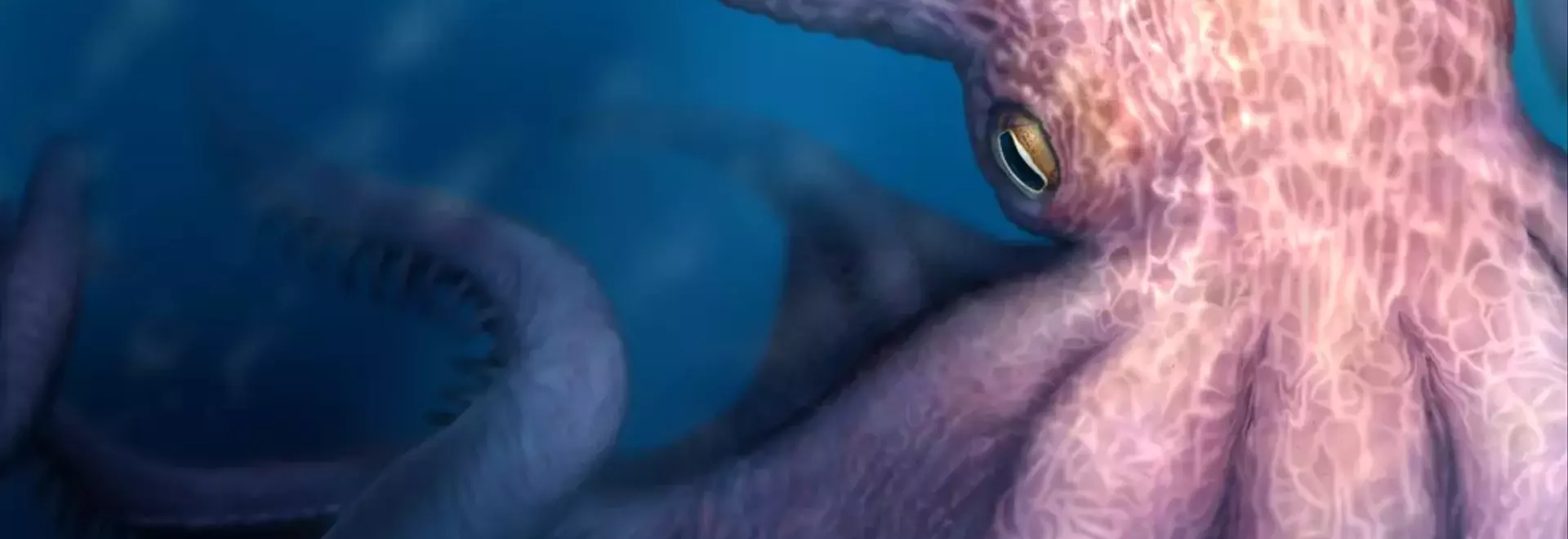
Giant Octopuses Roamed Cretaceous Seas
A groundbreaking study has shed light on the existence of immense octopuses that dominated the ancient seas during the late Cretaceous period. These creatures, which could reach lengths of up to 60 feet, were formidable predators. The research, employing advanced digital fossil-mining techniques on concretions found in northern Japan, provides rare evidence of these soft-bodied invertebrates that are typically difficult to preserve in the fossil record. The findings offer a captivating glimpse into the prehistoric marine ecosystem and challenge previous understandings of cephalopod evolution.
Discovery Unveils Ancient Kraken-like Cephalopods in Cretaceous Oceans
In April 2026, a remarkable discovery was published in the journal Science, presenting compelling evidence of colossal octopuses that roamed the Earth's oceans approximately 100 million years ago during the late Cretaceous period. Researchers, led by paleontologist Yasuhiro Iba from Hokkaido University, collaborated with Jörg Mutterlose, a paleontologist at Ruhr University Bochum in Germany, to uncover these ancient marine giants. Using an innovative method they termed "digital fossil-mining," the team examined large rock concretions found in northern Japan. This technique involved cutting the concretions into thin slices, capturing images of any preserved fossils, and then reconstructing them in 3D, a process significantly aided by artificial intelligence.
Within these ancient rocks, the scientists unearthed fossilized octopus jaws, which resemble the beak of a bird and are composed of a lower shovel-like jaw and an upper jaw. Unlike the soft tissues that usually decompose, these hard jaws were preserved, providing a crucial window into the lives of these elusive creatures. By analyzing the size and form of these jaws, the researchers estimated that these octopuses could have reached an astonishing length of up to 60 feet, surpassing the size of modern giant Pacific octopuses and evoking images of the legendary Kraken. This revelation stunned zoologists, including Fernando Ángel Fernández-Álvarez from the Spanish Institute of Oceanography, who expressed surprise at the magnitude of these prehistoric cephalopods.
Further examination of the fossilized jaws revealed chips and scratches, suggesting that these ancient octopuses were active carnivores with a diet rich in hard-shelled prey, such as shrimp, bivalves, lobsters, and nautilus-like animals. The wear patterns on the jaws, particularly the observation that the right side was often more worn than the left, also hinted at a fascinating aspect of their biology: these early octopuses might have exhibited a preference for one side of their jaw, potentially indicating an already well-developed brain and complex behaviors, similar to the advanced intelligence seen in modern octopuses. This groundbreaking study not only expands our knowledge of ancient marine life but also underscores the profound evolutionary roots of the extraordinary traits observed in octopuses today, painting a vivid picture of a majestic and predator-filled Cretaceous ocean.
The revelation of these immense ancient octopuses is truly inspiring, prompting us to reconsider the vast and mysterious history of life on Earth. It highlights how even the most unlikely of creatures, seemingly destined for decay, can leave behind subtle clues that, with innovative scientific approaches, can unlock profound secrets about our planet's past. This discovery reminds us of the endless possibilities for uncovering new species and understanding evolutionary pathways, urging continued exploration and technological advancement in paleontology. Moreover, it emphasizes the importance of interdisciplinary collaboration, as evidenced by the successful blend of paleontology and artificial intelligence in this study, which opens new avenues for future scientific endeavors.