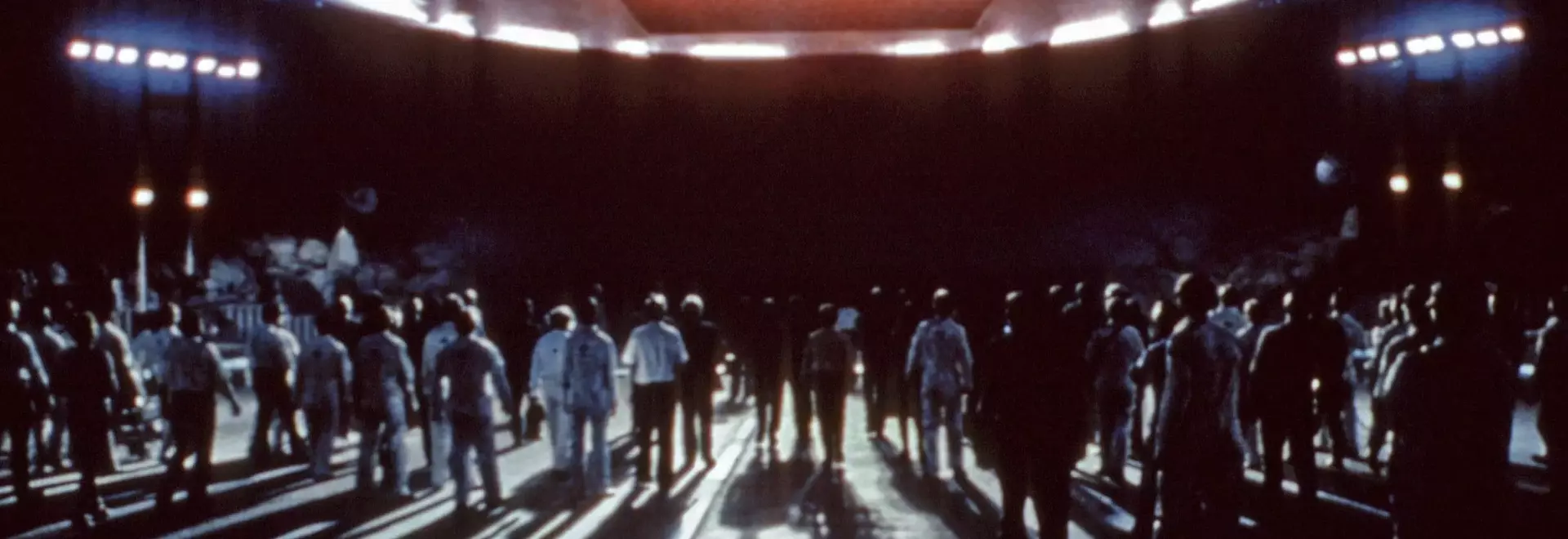
The Enduring Enigma of Spielberg's Close Encounters
Steven Spielberg's 1977 cinematic creation, "Close Encounters of the Third Kind," stands as a monumental work in the science fiction genre, distinguished by its unconventional storytelling and profound personal resonance for the director. While often overshadowed by the release of "Star Wars" in the same year, Spielberg's film forged its own path, offering a narrative that eschewed traditional plot structures in favor of an immersive exploration of the unknown. The movie’s unique blend of fear and wonder, coupled with its depiction of humanity’s reaction to alien contact, solidifies its place as a classic. Its enduring appeal lies in its ability to disturb and surprise, presenting an optimistic yet terrifying vision that continues to provoke thought and discussion decades after its initial release.
This analysis further explores how "Close Encounters" challenges conventional Hollywood narratives by prioritizing spectacle and transcendental experience over individual character arcs, as seen through the journey of Roy Neary. The film’s masterful use of sound and visual effects to create an atmosphere of both breathless excitement and disquieting confusion is examined, highlighting John Williams’ iconic score and the contrasting elements of playfulness and menace in the alien encounters. Ultimately, the article posits that the film’s lasting power stems from its raw emotional honesty, mirroring Spielberg's own creative impulses and confronting audiences with the profound complexities of desire and the unknown, making it a uniquely personal and perpetually unsettling work.
A Singular Vision: Challenging Sci-Fi Conventions
Steven Spielberg's "Close Encounters of the Third Kind," released in 1977, distinguished itself as an evolutionary outlier within the science fiction genre, especially when contrasted with the commercially dominant "Star Wars." Despite Lucas's bet that Spielberg's film would outperform his own, "Close Encounters" forged a unique narrative path, diverging from conventional blockbuster formulas. The movie's enduring strangeness and profound impact stem from Spielberg's deliberate choice to prioritize an ecstatic and often unsettling exploration of first contact over a more straightforward space adventure. This approach not only cemented its place as a personal film for Spielberg but also influenced his subsequent works like "Raiders of the Lost Ark" and "E.T.," demonstrating its role as a foundational piece in his directorial evolution, even as it remained distinct from the broader sci-fi landscape it helped shape.
The film's peculiar charm lies in its unconventional structure and its deeply personal connection to Spielberg's own creative spirit, often described as his most candid work outside of "The Fabelmans." "Close Encounters" defies traditional three-act structures, instead weaving together disparate mysterious events, a paranoid psychological thriller, and a climactic, rapturous light show that doesn't resolve storylines but rather obliterates them in the face of transcendent spectacle. This narrative choice, combined with Spielberg's intimate identification with Richard Dreyfuss's character, Roy Neary, speaks to the film's unfiltered emotional core. The movie's technical brilliance, from its still-dazzling special effects to John Williams's iconic score, further amplifies its unsettling blend of optimism and terror, showcasing Spielberg's uncalculated and unguarded artistic expression. Despite its familiar imagery, "Close Encounters" retains its power to disquiet and surprise, making it a unique and enduring masterpiece.
The Emotional Core: Blending Hope and Terror
"Close Encounters of the Third Kind" masterfully navigates a complex emotional landscape, intertwining hope and terror in a way that is both characteristic of Spielberg's work and uniquely disquieting. The film juxtaposes Roy Neary's obsessive quest for understanding with the terrifying implications of alien contact, creating a narrative that is at once optimistically open-ended and deeply unsettling. Spielberg's ability to elicit both fear and wonder is on full display, as he presents the international effort to communicate with aliens as an ominous conspiracy, yet portrays it internally as a peaceful scientific endeavor. This duality extends to the alien presence itself: the UFOs are depicted as playful and visually stunning, yet their initial appearances are accompanied by alarming scenes of chaos and destruction, challenging viewers to reconcile these contrasting elements and delve into the psychological complexities of first contact.
The emotional depth of "Close Encounters" is further amplified by its ingenious use of sound and score, which contributes significantly to its unsettling atmosphere. John Williams's soundtrack oscillates between romantic grandeur and chaotic atonality, most notably in the iconic musical conversation between humans and aliens, which evolves from joyful harmony to frenzied delirium. This auditory layering, combined with a cacophonous gabble of dialogue, immerses the audience in a state of breathless excitement and confusing disorientation, heightening the film's nightmarish qualities despite the absence of overt tragedy. The movie's exploration of the emotional clashes—hope and terror, joy and madness, suspicion and awe—demonstrates Spielberg's artistic courage. By presenting these intense emotions not as contradictions but as integral parts of the human experience when confronted with the unknown, "Close Encounters" achieves an elemental power that continues to resonate, revealing the profound fear that can accompany the fulfillment of our deepest desires.