Automakers vs. the Right to Repair: A Growing Automotive Debate
A heated debate surrounding the 'Right to Repair' movement is currently unfolding within the automotive industry, intensifying after recent remarks by former President Donald Trump. This discussion pits car manufacturers like Ford and General Motors against vehicle owners and independent repair facilities. While automakers frequently cite safety, intellectual property, and cybersecurity risks as justifications for limiting repair access, proponents of the 'Right to Repair' emphasize consumer autonomy and fair competition. The existing framework, including a 2014 voluntary agreement, appears insufficient to bridge the divide, leading to calls for more definitive legislative solutions to empower car owners.
During a recent Oval Office meeting focused on the revitalization of coal plants, former President Donald Trump unexpectedly brought up the topic of 'Right to Repair' laws. He recounted a meeting on June 3rd with representatives from Ford, General Motors, and auto industry leader Roger Penske, where the issue was discussed. Trump conveyed his surprise at the existence of such legislation, describing it as 'strange' and noting automakers' apparent reluctance to allow owners to repair their own vehicles. He also reminisced about individuals from his youth who, despite not being proficient in arithmetic, possessed a remarkable ability to 'fix an engine blindfolded.' While he did not specify particular legislation or a concrete solution, Trump indicated that the federal government would intervene to 'straighten away' the matter, suggesting a forthcoming resolution to this complex issue.
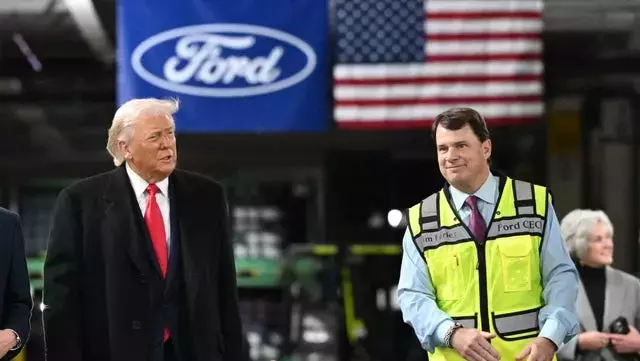
In response to Trump's comments, Ford CEO Jim Farley addressed the issue in a video interview with the Detroit Free Press. Farley defended Ford's position on restricting repair access, primarily framing it as a safety concern. He contrasted the repairability of a vintage 1973 Ford Bronco with the complexities of a modern one, suggesting that owners attempting to repair newer models at home could 'put people's lives at risk.' Farley also touched on the company's reluctance for owners to perform warranty work themselves, although this point is peripheral to the broader 'Right to Repair' debate, which often focuses on repairs outside of warranty periods. He briefly mentioned the need for repairs to be conducted at a 'reasonable cost,' without elaborating on what this would entail in practice, leaving open the question of whether this would include more affordable access to specialized diagnostic tools and information for consumers and independent shops.
This ongoing dispute is further illuminated by recent trends in the automotive market. With the average vehicle age now extending to 13 years, car owners are retaining their vehicles for longer durations than ever before. This trend has significant financial implications for automakers and their dealerships. Data from Cox Automotive indicates a 12 percent decline in dealer service revenue since 2018. In response to these shifts, Ford has initiated an advertising campaign encouraging its owners to utilize dealership services for maintenance and repairs, rather than independent shops. This strategic move highlights the competitive landscape for aftermarket services and the financial pressures faced by manufacturers as the lifecycle of vehicles lengthens and service revenue streams become increasingly vital.
Automakers, often through lobbying groups like the Alliance for Auto Innovation, frequently raise concerns about security and intellectual property when discussing the 'Right to Repair.' They argue that providing broader access to the complex computer systems embedded in modern vehicles could open doors for malicious actors to gain control, either locally or remotely, posing significant security risks. While this argument has some merit regarding connected vehicle vulnerabilities, consumer advocates counter that manufacturers are overly restrictive, even withholding basic diagnostic information. They contend that much of this information is deemed 'proprietary' intellectual property, a classification that essentially allows companies to differentiate themselves but also limits external repair capabilities. The intellectual property argument appears to be a core driver behind automakers' resistance to the 'Right to Repair,' more so than the safety and security claims.
The 'Right to Repair' issue in the auto industry is not new. A 2014 memorandum of understanding, signed by major automaker representatives, aimed to address this by agreeing to provide private owners and independent repair facilities with essential diagnostic tools, repair information, and access to onboard computer systems for vehicles produced from 2002 onwards, with enhanced access for 2018 models and later. The memo included a mechanism for challenging manufacturers if information or access was not provided, allowing 30 days for a response. However, this agreement contained significant caveats, excluding telematics systems and immobilizers, and crucially, it did not compel manufacturers to disclose 'trade secrets.' The broad definition of a trade secret created a loophole, rendering the memorandum non-binding and lacking a clear enforcement mechanism. Consequently, consistent access to necessary repair information remains a challenge for independent entities.
The debate surrounding the 'Right to Repair' for vehicles continues to be a complex issue, balancing consumer autonomy and competitive markets with manufacturers' legitimate concerns about safety, intellectual property, and vehicle security. As cars become increasingly sophisticated and connected, finding a comprehensive and enforceable solution that satisfies all stakeholders will be crucial for the future of vehicle maintenance and repair.