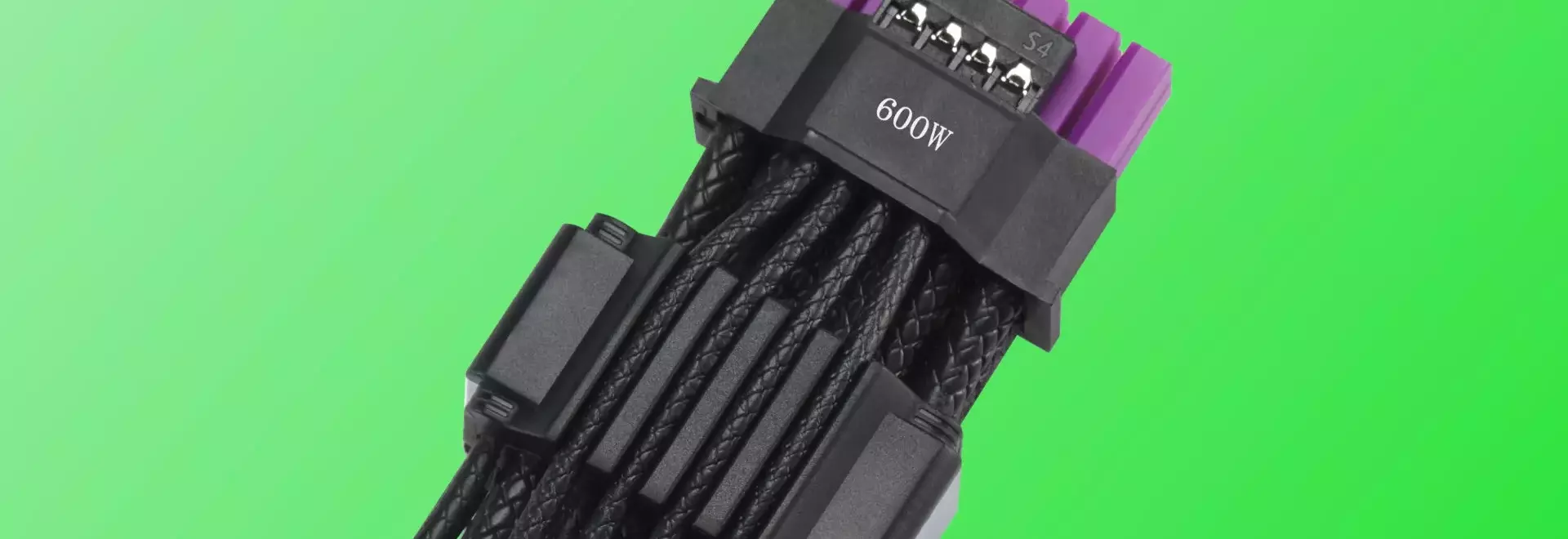
ASUS ROG Equalizer Cable Faces Melting Issue
A recently introduced power cable from ASUS, the ROG Equalizer, intended to mitigate the prevalent issue of melting connectors in high-performance Nvidia RTX graphics cards, has reportedly suffered its first failure. This incident brings to light the persistent challenges associated with the 12VHPWR and updated 12V-2x6 power connectors. Despite design efforts, these connectors remain susceptible to damage, particularly when power is unevenly distributed among the pins under intense computational loads. The incident, while lacking comprehensive details regarding the specific conditions of use, underscores the ongoing necessity for more reliable and fundamentally sound solutions to protect expensive GPU hardware from power-related failures.
The recurring problem of melting power connectors in powerful GPUs has plagued users since the introduction of Nvidia's RTX 40-series, even leading to legal action. This situation arises because the compact design of these connectors, while efficient for space, struggles to handle the substantial and often uneven current draw of modern graphics cards. The design's vulnerability to imbalances means that if even one pin malfunctions or carries an excessive load, it can initiate a cascade of overheating and melting, threatening the entire component. As GPUs become increasingly power-hungry and expensive, the imperative for robust power delivery systems that can actively monitor and balance current across all pins becomes critical, moving beyond passive preventative measures to safeguard hardware investments.
The Recurring Connector Melting Phenomenon
The issue of power connector melting in high-performance graphics cards, particularly those from Nvidia's RTX series, has been a significant concern for PC enthusiasts and hardware manufacturers alike. Despite continuous efforts to refine connector designs, including the transition from 12VHPWR to 12V-2x6, incidents of overheating and subsequent melting persist. This recurring problem stems from the immense power demands of modern GPUs, which can draw hundreds of watts under heavy loads. When this power is not distributed perfectly evenly across all connection pins, certain pins can experience disproportionately high current, leading to localized heating that exceeds the material's tolerance. This can result in irreversible damage to both the cable and the graphics card connector, necessitating costly replacements and causing considerable frustration for users. The challenge lies in developing a solution that can consistently and reliably manage these power fluctuations, ensuring the longevity and safety of high-end graphics hardware.
The underlying cause of melting connectors is rooted in the physical limitations and operational demands placed on these high-density power interfaces. An Nvidia RTX 4090, for example, can consume up to 450 watts, distributed across multiple pins. While theoretically, each pin is designed to handle a certain amperage, any minor imperfection in the connection, such as a slight misalignment or incomplete insertion, can concentrate the current flow to fewer pins. This concentration dramatically increases the amperage on the affected pins, pushing them beyond their safe operating limits and leading to rapid temperature increases. The plastic housing and metal contacts then begin to degrade, resulting in the visible signs of melting and charring. Current preventative measures, such as redesigned cables like the ASUS ROG Equalizer, often focus on improving the physical connection, but without an active monitoring and load-balancing mechanism at the hardware level, they may not entirely eliminate the risk. The financial implications for both consumers and manufacturers are substantial, highlighting the urgent need for a more robust and intelligent power delivery standard.
Ensuring GPU Power Stability
To mitigate the risk of power connector melting in high-end graphics cards, several practical steps can be taken, although a definitive hardware-level solution remains elusive. One crucial recommendation is to prioritize using a power supply unit (PSU) that features a native 12VHPWR or 12V-2x6 output and cable. This approach reduces potential points of failure often associated with adapter cables, which can introduce additional resistance and connection inconsistencies. Furthermore, users should avoid repeatedly connecting and disconnecting the power cable from their GPU. Frequent manipulation can weaken the physical contacts over time, leading to looser connections and increased resistance, thereby exacerbating the risk of overheating. These preventative measures, while not foolproof, can significantly enhance the stability and safety of the power connection to high-wattage graphics cards, contributing to a more reliable computing experience.
Beyond careful hardware selection and handling, optimizing the graphics card's power consumption through software can also play a vital role in preventing melting incidents. Undervolting, the process of reducing the voltage supplied to the GPU while maintaining or even improving performance, is a highly effective strategy. Modern GPUs often come with factory settings that supply more voltage than necessary, especially when operating at peak clock speeds. By carefully adjusting the voltage curve through applications like MSI Afterburner, users can achieve lower operating temperatures and reduced power draw without sacrificing performance. This not only decreases the strain on the power connector but can also lead to a quieter and more energy-efficient system. Implementing an undervolt can significantly lower the current load on individual power pins, thereby reducing the likelihood of exceeding their thermal limits. Until graphics card and power supply manufacturers integrate active, intelligent power monitoring and balancing systems directly into their designs, these user-driven optimizations remain essential for safeguarding valuable GPU investments.