The Art of Crafting Exquisite Cream-Filled Doughnuts
Indulge in Homemade Bliss: Crafting the Perfect Cream-Filled Doughnuts
Precision in Preparation: The Significance of Ingredient Temperatures for a Fluffy Dough
Achieving a supremely light and airy doughnut begins with a carefully hydrated, somewhat sticky dough. A higher moisture content encourages greater expansion during both proofing and frying, leading to a delicate internal structure filled with air pockets. While the dough's stickiness might seem challenging, a stand mixer effortlessly handles the mixing, requiring only accurate ingredient additions. To prevent the dough from overheating during prolonged kneading – which can prematurely activate yeast and melt butter, resulting in a greasy product – it's crucial to use chilled milk and eggs. On particularly warm days, pre-chilling the flour in the freezer can further regulate dough temperature. The sole exception is butter, which needs to be slightly softened but still cool to the touch. This ensures it incorporates smoothly without melting, ideally by being cut into small pieces 20 to 30 minutes before use.
The Science of Softness: Two-Stage Mixing and Overnight Chilling for Superior Doughnuts
The dough preparation involves a two-stage mixing approach. Initially, all ingredients except the butter are combined in a stand mixer with a dough hook for five to seven minutes until a somewhat smooth, cohesive dough forms. A short five-minute rest period, covering the bowl with plastic wrap or a damp towel, is beneficial. This pause prevents the dough from becoming too warm and allows the gluten to develop further through a mini-autolyze process, effectively reducing overall kneading time. After this rest, the softened butter is gradually added, piece by piece, ensuring full incorporation. The dough is then kneaded further until it reaches the 'windowpane stage,' indicating a strong gluten network capable of producing a light, open crumb. A simple test involves stretching a golf-ball-sized piece of dough until light can be seen through it without tearing. Once ready, the dough is refrigerated for 12 to 20 hours for a slow fermentation, which enhances flavor complexity and makes the chilled dough much easier to handle.
Mastering the Fry: Essential Techniques for Deep-Frying Doughnuts to Golden Perfection
While deep-frying can often feel daunting, the reward of a freshly fried doughnut makes the effort worthwhile. For a more manageable process without a dedicated deep fryer, consider these tips: Opt for a medium-sized, heavy-bottomed Dutch oven or pot (a three-quart stainless steel option is ideal). This minimizes the amount of hot oil to handle and dispose of. Frying two to three doughnuts at a time helps maintain a consistent oil temperature, allowing it to recover quickly between batches. Maintain an oil temperature of approximately 350°F (175°C) using a candy or digital alarm thermometer. This ensures even cooking, preventing a dark exterior with a raw interior. To preserve the delicate structure of fully proofed doughnuts, transfer them to the hot oil on small squares of parchment paper. The paper can be easily peeled away after a few seconds in the oil, helping the doughnuts retain their shape and airiness. Properly fried doughnuts will be deep golden brown and register about 180°F (82°C) internally.
The Secret to Silky Sweetness: Why Crème Légère is the Ultimate Doughnut Filling
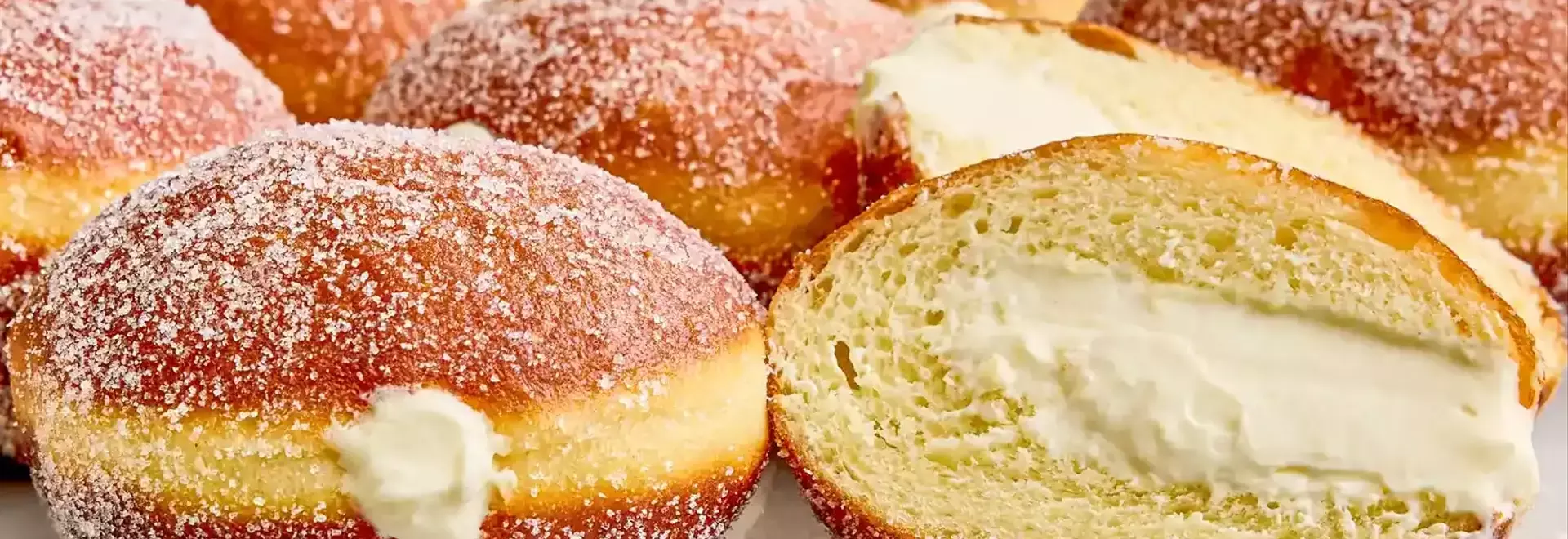
These warm, sugar-coated doughnuts are destined for a luxurious vanilla crème légère filling – a delightful combination of pastry cream and whipped cream. The result is an airy, creamy, and perfectly sweet custard. A modified recipe using half-and-half instead of whole milk for the pastry cream yields an exceptionally silky texture. An generous amount of whipped cream is folded in, creating an impossibly light and fluffy filling that pipes beautifully into the doughnuts. This custard can be prepared up to two days in advance, allowing for a more streamlined baking process. It's recommended to make the pastry cream on the same day the dough is prepared, ensuring it's perfectly chilled and set for the final assembly.
The Art of Infusion: Expert Techniques for Filling Your Homemade Doughnuts
Filling doughnuts can be a delicate task, and the disappointment of an under-filled pastry is easily avoided with the right technique. The key lies in creating ample internal space and employing a controlled filling method. You'll need two simple tools: a piping bag and a paring knife. While specialized Bismarck tips exist, a standard piping bag with a 1/2-inch opening (or a plain round tip of the same size) works effectively. To prepare each doughnut, carefully insert a paring knife into its center and gently twist a few times to create a generous cavity, taking care not to pierce through the top or bottom. Then, insert the piping bag tip into this incision and gently squeeze to fill. While a vanilla crème légère is a classic choice, feel free to experiment with other creamy fillings or fruity preserves like raspberry jam, chocolate pastry cream, or lemon curd. Regardless of your filling, serve these doughnuts fresh; they are at their peak within a few hours of frying, ensuring all your hard work is savored at its absolute best.