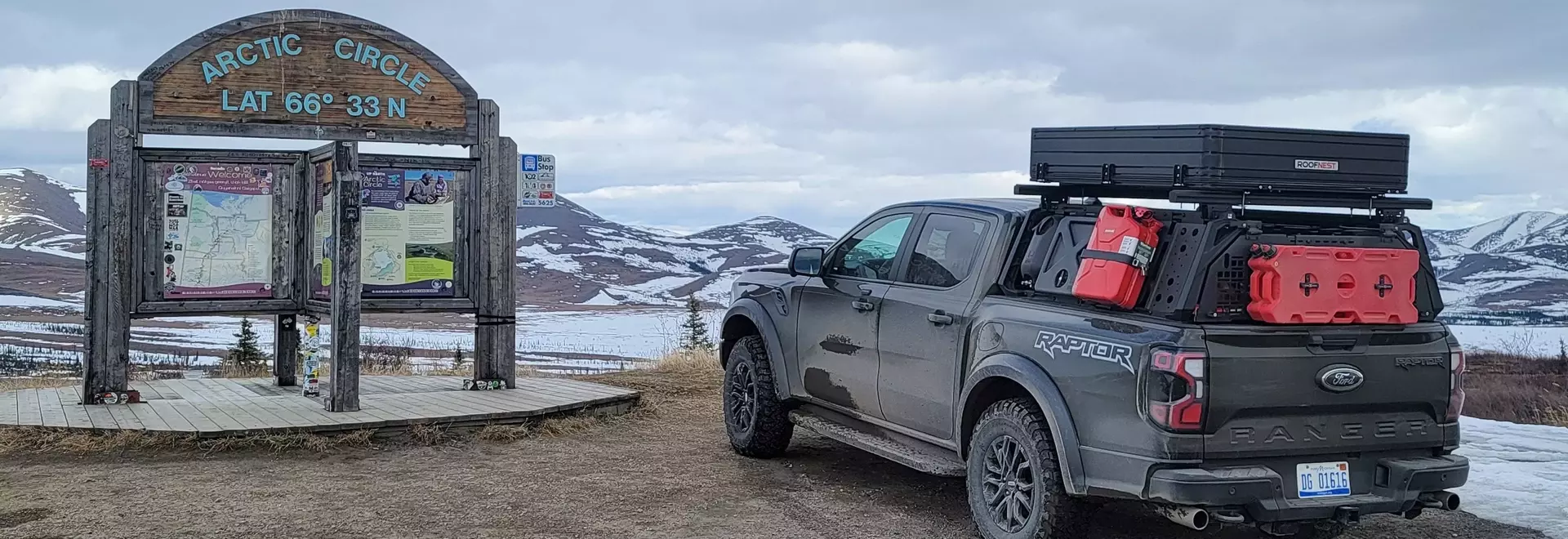
2026 Ford Ranger Raptor Long-Term Test: 10,000-Mile Update
The 2026 Ford Ranger Raptor has undergone rigorous long-term testing, accumulating over 10,000 miles, including an demanding expedition from Michigan to the remote Canadian Arctic. This comprehensive evaluation highlighted the vehicle's impressive off-road capabilities and overall robust performance, despite some minor criticisms regarding its technical features and fuel efficiency under heavy load conditions. The truck demonstrated remarkable durability and adaptability across diverse environments, from routine daily commutes to extreme wilderness challenges, affirming its design as a versatile and resilient mid-size pickup.
Initial experiences with the Ford Ranger Raptor were largely positive, with drivers commending its comfortable ride quality, effectively smoothing out road imperfections, and its impressive overall handling. However, extended use, particularly during a lengthy trek to the Canadian Arctic, brought to light several areas for improvement concerning its technological integration and fuel consumption. The journey, spanning approximately 8,000 miles, necessitated significant modifications, including a bed rack laden with camping equipment, extra fuel, and other essentials, transforming the pickup into a true overland vehicle. This additional weight, while crucial for the expedition, noticeably impacted the vehicle's fuel economy, which averaged around 14 mpg, below its EPA estimates. Despite these challenges, the Ranger Raptor's fundamental engineering, including its sturdy suspension and all-terrain tires, remained unfazed, providing a reliable and capable platform for navigating both paved roads and formidable off-road trails.
Arctic Expedition and Off-Road Resilience
The Ford Ranger Raptor's extensive 8,000-mile journey to the Canadian Arctic served as a definitive test of its durability and off-road capabilities. During this arduous trip, the truck faced diverse and challenging conditions, including the notorious Dempster Highway—a rugged 460-mile stretch of dirt and gravel known for its unpredictable terrain, seasonal damage from shifting earth, and large potholes. Despite carrying a substantial load of gear, the Raptor's advanced suspension system, featuring 2.5-inch Fox Live Valve adaptive dampers and a sophisticated Watt's linkage, absorbed severe impacts with remarkable composure. Furthermore, the vehicle successfully navigated a perilous crossing of the Peel River, which had unexpectedly turned to water, underscoring its impressive fording abilities. These experiences collectively demonstrated the Ranger Raptor's exceptional resilience and performance in extreme environments, proving it to be a dependable companion for demanding wilderness adventures.
The journey to Tuktoyaktuk pushed the Ford Ranger Raptor to its limits, showcasing its exceptional engineering and preparation for extreme conditions. Equipping the truck with a rooftop tent, various gear pods, water tanks, and a full complement of tools, bedding, and electronics turned it into a self-sufficient mobile base. The inclusion of three extra fuel cans, providing an additional 13 gallons, was a critical measure given the Ranger Raptor's fuel consumption and the vast distances between service stations in Canada's remote highways. Even with the added weight, which visibly compressed the truck's rear, its suspension maintained remarkable suppleness, effectively cushioning occupants from the worst road conditions. The BFGoodrich All-Terrain T/A KO3 tires proved their worth, remaining unphased by sharp volcanic rock and deep ruts. This comprehensive test confirmed that despite being primarily known for high-speed desert running, the Ranger Raptor excels as a reliable, ground-pounding freighter capable of traversing some of the world's most challenging landscapes without faltering.
Technological Quibbles and Daily Driving Impressions
While the Ford Ranger Raptor excelled in extreme off-road scenarios, its daily driving experience and onboard technology presented some notable quirks. Office feedback highlighted specific issues such as the counter-intuitive navigation of the gauge cluster's data screen, making it difficult to access features like the tire-pressure display. Additionally, the blind-spot and cross-traffic sensors experienced intermittent failures, particularly on paved highways rather than in the dirt and grime of off-road conditions where such malfunctions might be expected. The speed-limit sign reader also proved problematic in the American context, often causing the truck to abruptly brake based on sign changes, a behavior that drivers found unsettling and necessitated its deactivation. These observations suggest that while the Raptor's hardware is robust, its software and driver-assistance systems could benefit from further refinement for a more seamless and intuitive user experience in everyday driving situations.
Further scrutiny of the Ford Ranger Raptor's technological suite revealed a blend of commendable features and areas requiring enhancement. The steering effort, for instance, offered four distinct settings, though the default was perceived as excessively heavy for a truck, prompting calls for more balanced tuning. The gear shifter also sparked divided opinions, with some finding its design cumbersome while others appreciated its console-mounted functionality. Moreover, the lane-keeping assist system, despite its accuracy, was criticized for demanding constant driver input to prevent audible alerts, even when competently maintaining its line. This forced interaction was viewed as an unnecessary distraction for an otherwise capable system. On the maintenance front, an early coolant top-up at around 9,000 miles indicated a minor, but easily rectified, fluid level issue. Despite these technological and usability quibbles, the Ranger Raptor's personalized driving modes, accessible via steering wheel buttons, and its responsive 10-speed automatic transmission with paddle shifters, continue to enhance its dynamic appeal. The vehicle's ability to match the acceleration of its larger F-150 counterpart, achieving 60 mph in 5.2 seconds, further cements its performance credentials, making it a compelling choice for both adventure and daily utility.